Adreno 850 vs Magin GPU: The 2026 Mobile Graphics War Explained
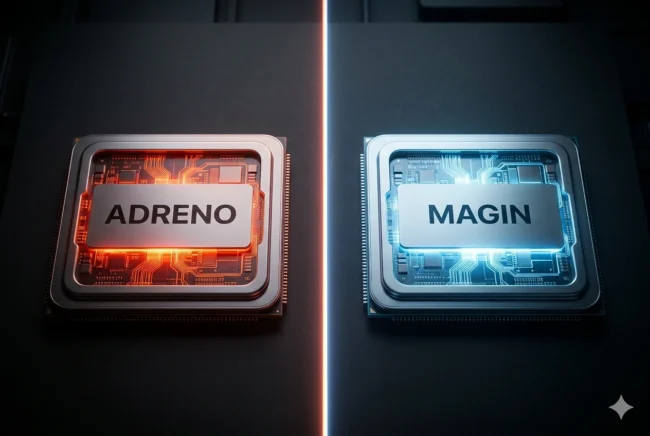
The battle for mobile supremacy in late 2026 is no longer defined by CPU clock speeds. The true frontier—and the metric that will dictate the lifecycle of your next flagship smartphone—is localized graphical compute. With the imminent launch of Qualcomm’s Adreno 850 (housed in the Snapdragon 8 Elite Gen 6 Pro) and MediaTek’s Magin GPU (powering the Dimensity 9600), the industry is preparing for an unprecedented clash of silicon.
Both companies are utilizing TSMC’s advanced 2nm (N2P) node, but their architectural philosophies are fundamentally opposed. We are witnessing a war between raw, sprawling hardware expansion and highly orchestrated AI-assisted rendering.
For the emulation enthusiast, the mobile gamer, and the power user demanding desktop-class 3D performance, here is the definitive breakdown of the Adreno 850 vs. Magin GPU war.
Architectural Philosophy: Density vs. Synergy
The core difference between the two GPUs lies in how they allocate physical die space and manage rendering pipelines on the 2nm node.
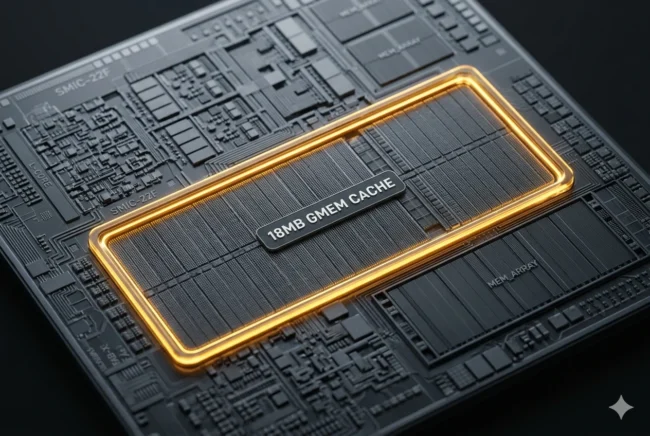
Adreno 850 (The Brute Force Approach): Qualcomm is reportedly continuing its strategy of massive, localized hardware expansion. The Adreno 850 focuses on raw arithmetic logic unit (ALU) density. It is designed to muscle through complex geometric data purely through sheer compute volume, relying on an enormous on-die cache (rumored at 18MB GMEM) to minimize latency.
Magin GPU (The Synergistic Approach): MediaTek’s “Magin” (based on ARM’s Mali-G2 Ultra architecture) is physically massive, featuring 10+ cores. However, its philosophy centers on synergy. It relies heavily on a Neural Shader Scheduler (NSS), which actively offloads predictive tasks and motion estimation to the Dimensity 9600’s dual NPUs, creating a highly efficient, distributed rendering workload.
The Ray Tracing Arms Race
Hardware-accelerated ray tracing on mobile devices has largely been a tech demo until now. In 2026, both architectures are attempting to make it a playable reality at 60FPS.
Qualcomm’s RT Overhaul: The Adreno 850 features a complete redesign of its Ray Intersection Units. Leaks indicate a focus on “complex” ray interactions, specifically bounding volume hierarchy (BVH) traversal happening entirely in hardware. This means dynamic lighting and complex reflections won’t instantly throttle the GPU after 10 minutes of gameplay.
MediaTek’s “Magin” RT Implementation: The ARM-based Magin GPU is taking a slightly different route, optimizing for “hybrid” rendering. It uses the NPU to predict and clean up ray-traced noise (denoising), meaning the GPU doesn’t have to cast as many physical rays to achieve a clean image. This AI-assisted RT is expected to offer superior battery life during intense gaming sessions.
Frame Generation and Upscaling (The DLSS of Mobile)
The ability to render at a lower resolution and flawlessly upscale to 1440p or 120Hz is the defining feature of modern graphics.
Adreno Frame Motion Engine 3.0: Qualcomm’s proprietary upscaler is heavily reliant on the Adreno 850’s massive 18MB GMEM. By keeping the frame data local rather than sending it to system RAM, the optical flow engine can generate interpolated frames with near-zero latency, crucial for high-speed mobile gaming.
MediaTek’s Neural Reconstruction: MediaTek is leaning into its AI dominance here. The Magin GPU utilizes the second-generation Scalable Matrix Extension (SME2) to run advanced neural networks that reconstruct frames pixel-by-pixel. Early benchmarks suggest MediaTek’s approach produces fewer visual artifacts (like “ghosting”) during rapid camera movements compared to Qualcomm’s optical flow method.
Memory Bandwidth: The LPDDR6 Bottleneck
A GPU is only as fast as the memory feeding it. In 2026, the transition to ultra-fast memory standards is creating a distinct divide in performance potential.
The Pro-Tier Requirement: Both the Adreno 850 (in the SM8975) and the Magin GPU require LPDDR6 memory (14,400 MT/s) to reach their peak potential. This massive bandwidth is necessary to stream high-resolution textures without stuttering.
The Qualcomm Compromise: As we previously reported, Qualcomm is hobbling its “Standard” Gen 6 chip (SM8950) with slower LPDDR5X memory. This means the Adreno 845 (the 850’s smaller sibling) will be artificially starved of bandwidth, significantly lowering its sustained performance.
MediaTek’s Universal Support: Leaks suggest MediaTek is ensuring the Dimensity 9600 platform utilizes LPDDR6 across the board. If true, the Magin GPU will have a distinct bandwidth advantage in standard ($999) flagships, as it won’t be artificially bottlenecked to protect a “Pro” tier.
Emulation Performance: The Ultimate Stress Test
For the power user, native Android games are rarely the benchmark. The true test of a mobile GPU is how it handles heavy translation layers for PC or console emulation (e.g., Switch or PS3 emulators).
Adreno Driver Maturity: Qualcomm holds a massive historical advantage here. The Adreno driver stack is the gold standard for emulation developers. The Adreno 850’s raw ALU density and mature OpenGL/Vulkan drivers make it the immediate favorite for brute-forcing complex emulation tasks.
Mali’s Historical Struggle: Historically, ARM Mali GPUs (which the Magin is based on) have suffered from driver quirks and poorer emulation compatibility compared to Adreno.
The 2026 Turning Point? However, MediaTek has been aggressively working with developers to optimize the Vulkan drivers for the Magin architecture. If the driver stack is finally stable, the Magin’s massive 10-core layout and 5.0GHz CPU support could make it an emulation powerhouse.
The Verdict: Which GPU Wins 2026?
The “winner” of the 2026 mobile graphics war depends entirely on the price bracket you are shopping in and the type of tasks you prioritize.
If you are buying an “Ultra” tier phone ($1,300+) and prioritize sheer, brute-force rendering and flawless emulation compatibility, the Qualcomm Adreno 850 remains the undisputed king of localized compute. Its massive cache and mature driver stack make it the safest bet for hardcore enthusiasts.
However, if you are looking at the standard flagship market ($999), the MediaTek Magin GPU is the clear disruptor. By offering an AI-synergized rendering pipeline and universal LPDDR6 support without artificial segmentation, MediaTek provides a smarter, more efficient graphical experience.
The Adreno 850 represents the pinnacle of traditional hardware scaling, while the Magin GPU represents the future of neural-assisted rendering. For the first time in years, the choice isn’t obvious—it’s architectural.