Intel-NVIDIA Superchip: What Lip-Bu Tan’s Tease Means for the Future of Data Centers
The semiconductor industry is prone to dramatic shifts, but the events of May 2026 have signaled an alliance that few could have predicted just a few years ago. During Carnegie Mellon University’s commencement ceremony on May 10, Intel CEO Lip-Bu Tan officially hooded NVIDIA CEO Jensen Huang with an Honorary Doctorate in Science and Technology. But the real news wasn’t the academic accolade—it was Tan’s explicit public statement that the two titans of silicon are actively collaborating to develop “exciting new products.”
For decades, Intel and NVIDIA have maintained a complex “frenemy” dynamic, occasionally cooperating but fiercely competing for dominance in server racks and desktop PCs. However, the relentless demands of the Artificial Intelligence boom, specifically the rise of Agentic AI, have fundamentally altered the landscape. Neither company can conquer the next decade of computing in isolation.
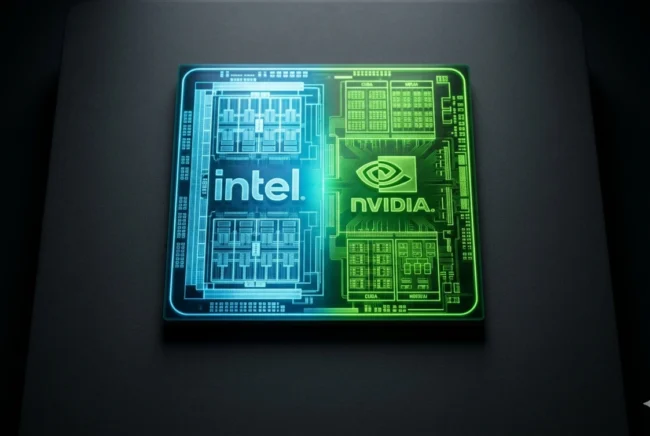
This public tease is the tip of the iceberg. Beneath the surface, supply chain leaks and architectural roadmaps reveal a deep, multi-tiered partnership that will give birth to the ultimate “Superchip.” Here is the comprehensive breakdown of what the Intel-NVIDIA alliance looks like, the rumored hardware, and why it changes the future of the modern data center.
The Death of the PCIe Bottleneck: Diamond Rapids meets NVLink
Historically, data centers have paired Intel Xeon CPUs with NVIDIA GPUs by connecting them across standard PCIe lanes. While PCIe 5.0 is fast, it simply cannot keep up with the staggering data bandwidth required by modern Large Language Models (LLMs) and complex AI orchestration.
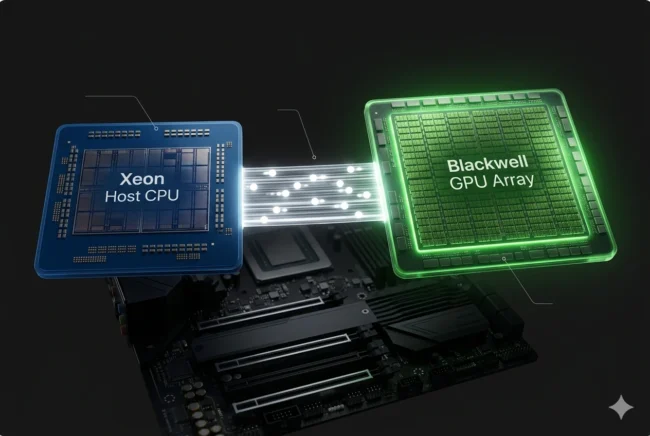
The NVLink Integration: The next major step for enterprise servers is the rumored integration of NVIDIA’s proprietary NVLink technology directly into Intel’s upcoming “Diamond Rapids” Xeon processors.
Unified Memory Coherency: By connecting the x86 host CPU to NVIDIA’s Blackwell or Rubin GPUs via NVLink, the entire system can access a massive, coherent pool of memory. This eliminates the latency-heavy process of constantly copying data back and forth between system RAM and GPU VRAM.
The DGX Foundation: We are already seeing the groundwork for this. NVIDIA’s current DGX Rubin NVL8 systems heavily rely on Intel Xeon 6 host CPUs to orchestrate memory access and system security. Deepening this relationship with a native NVLink bridge makes Intel the undisputed, mandatory CPU architecture for NVIDIA’s most expensive server racks.
Project “Serpent Lake”: The Consumer and Edge Crossover
While the data center is the primary focus, the Intel-NVIDIA alliance is reportedly bleeding into the high-end mobile and edge-computing markets to combat a mutual enemy: AMD’s “Strix Halo” APUs.
The Ultimate SoC: Industry insiders point to a collaborative project codenamed “Serpent Lake,” targeted for the 2028-2029 lifecycle. This architecture will allegedly combine high-performance Intel CPU cores with native NVIDIA RTX graphics IP on a single unified die package.
Crushing the Entry-Level GPU: Just as we analyzed with the Razor Lake-AX leaks, an SoC combining Intel compute and NVIDIA graphics would completely eliminate the need for discrete, entry-level laptop GPUs, streamlining motherboard designs for OEMs and delivering desktop-class rendering in incredibly thin form factors.
Edge AI Domination: For data centers, deploying localized “Edge AI” nodes requires massive graphical compute without the 1000W power draw of a rack-mounted GPU. A Serpent Lake-style Superchip would allow enterprise customers to deploy highly efficient, NVIDIA-accelerated inferencing nodes directly on the factory floor or at local cell towers.
The Foundry Factor: NVIDIA’s Escape from TSMC
Perhaps the most crucial, trillion-dollar aspect of Lip-Bu Tan’s strategy isn’t about Intel’s chip designs, but Intel Foundry Services (IFS).
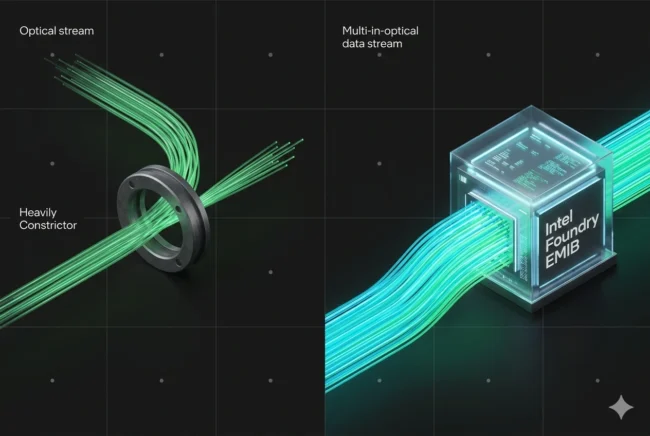
The TSMC CoWoS Crisis: NVIDIA is currently entirely reliant on Taiwan Semiconductor Manufacturing Company (TSMC) for its data center chips. However, TSMC’s advanced CoWoS (Chip-on-Wafer-on-Substrate) packaging capacity is severely bottlenecked. NVIDIA literally cannot physically manufacture GPUs fast enough to satisfy hyperscaler demands.
Intel’s EMIB Lifeline: To secure additional production volume, NVIDIA is reportedly partnering with Intel Foundry. Current leaks suggest NVIDIA’s next-generation “Feynman” AI accelerators will utilize Intel’s EMIB (Embedded Multi-Die Interconnect Bridge) advanced packaging solutions, shifting a critical portion of the supply chain away from Taiwan.
The 18A Node Potential: Beyond just packaging, rumors are swirling that NVIDIA is evaluating Intel’s bleeding-edge 18A (and subsequent 14A) fabrication nodes for future entry-level or mid-tier client GPUs. If Intel successfully prints NVIDIA silicon, it instantly legitimizes IFS as a true rival to TSMC, boosting Intel’s revenue exponentially.
Agentic AI and the Renaissance of the CPU
The narrative that “GPUs are the only thing that matters” is officially dead. The next phase of artificial intelligence is Agentic AI—software that doesn’t just answer questions, but autonomously navigates workflows, executes multi-step plans, and controls local systems.
Orchestration Heavy: Agentic AI requires massive, continuous single-threaded performance and complex logic routing to coordinate various AI models simultaneously. A GPU is terrible at this; it needs a powerful host CPU to act as the traffic controller.
The Heterogeneous Future: Under Lip-Bu Tan’s leadership, Intel is pivoting hard into this heterogeneous reality. By ensuring that Intel Xeon processors are deeply, seamlessly integrated into NVIDIA’s AI software stack (like the NVIDIA Dynamo framework), Intel secures its relevance.
Confidential Computing: As enterprise AI models handle increasingly sensitive corporate data, end-to-end confidential computing is mandatory. Intel’s mature x86 security extensions, when paired natively with NVIDIA’s accelerators, provide a secure enclave from the CPU data path all the way to the GPU execution layer.
The Threat to Competitors
When the world’s dominant AI hardware company and the historic king of x86 computing align their roadmaps, the entire industry feels the shockwave.
Squeezing AMD: AMD currently offers a compelling data center package by selling both EPYC CPUs and Instinct GPUs (like the MI300X). An Intel-NVIDIA Superchip neutralizes AMD’s “unified platform” advantage, presenting hyperscalers with a vastly superior, deeply integrated alternative.
Pushing Back ARM: Custom ARM-based server CPUs (like AWS Graviton or NVIDIA’s own Grace CPU) have been eating into Intel’s market share. By binding the ultimate NVIDIA data center experience directly to Intel Xeon x86 architecture via NVLink, Intel effectively builds a moat protecting its server dominance.
The Verdict: A Symbiotic Monopoly?
Lip-Bu Tan’s Carnegie Mellon tease was not an off-the-cuff remark; it was the public acknowledgment of a massive, strategic realignment. NVIDIA has the unparalleled acceleration hardware, but it lacks the foundry capacity and the legacy x86 orchestration supremacy. Intel has the domestic foundries and the CPU dominance, but it missed the initial wave of the AI gold rush.
By fusing their respective strengths—from native NVLink integration on Diamond Rapids to shifting advanced packaging to Intel’s EMIB facilities—the Intel-NVIDIA alliance is forging an ecosystem that will be nearly impossible for the competition to dismantle. The era of buying separate CPUs and GPUs for the data center is ending. The era of the Superchip has arrived.