Dimensity 9500 in a Galaxy Tab S12 Series: What Samsung’s Shocking Switch Means for Snapdragon
For the better part of a decade, the formula for a premium Android tablet was set in stone: if it had a “Galaxy Tab S” badge on the box, it was powered by Qualcomm’s flagship Snapdragon silicon. It was an unspoken alliance that guaranteed the best possible Android experience. However, the ground beneath Qualcomm’s feet is collapsing.
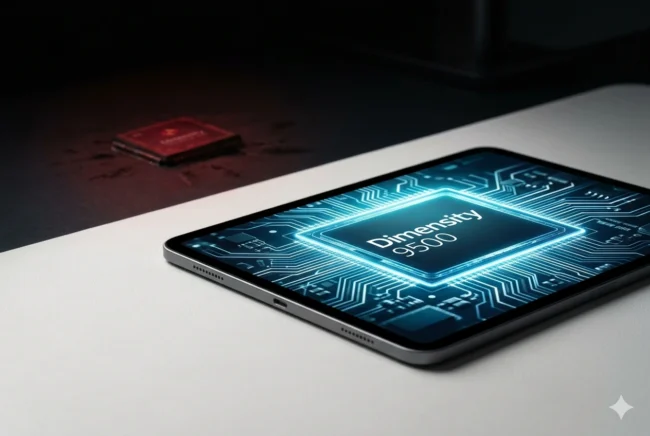
Recent software teardowns have confirmed what supply chain analysts have been whispering for months. Samsung is not just experimenting with MediaTek; they are fully committing. According to buried code within Samsung’s own system applications, the upcoming Galaxy Tab S12 series will completely bypass the Snapdragon 8 Elite Gen 5 in favor of MediaTek’s monstrous Dimensity 9500.
This is no longer a one-off anomaly. By utilizing MediaTek for the third consecutive tablet generation, Samsung is permanently rewriting the hierarchy of mobile silicon. Here is the comprehensive breakdown of the leaks, the architectural advantages of the Dimensity 9500 in a tablet chassis, and why Qualcomm should be terrified.
The AI Core Leak: Unmasking the MT6993
The confirmation of Samsung’s silicon pivot didn’t come from a hardware manifest; it came directly from Samsung’s software engineering team.
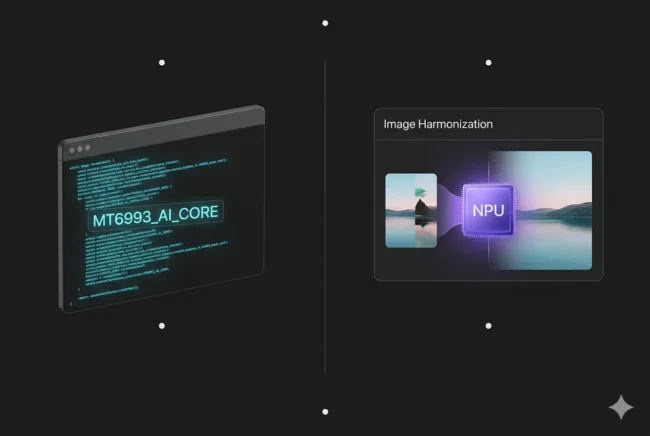
The APK Teardown: Developers digging into the latest version of Samsung’s “AI Core” application discovered explicit references to a chipset carrying the model number MT6993. In the semiconductor world, this sequence is definitively assigned to MediaTek’s flagship Dimensity 9500 platform.
Localized Generative AI: The code surrounding the MT6993 designation is specifically tied to heavy, on-device AI operations. The Tab S12 series will reportedly feature local AI-generated wallpapers, generative image expansion, and advanced localized photo editing, bypassing the latency of cloud-server processing.
Image Harmonization: The most notable new feature discovered in the leak is “Image Harmonization.” This AI pipeline intelligently analyzes and adjusts the lighting, color grading, and contrast of pasted subjects to make composite edits look completely natural. Running this locally requires massive NPU throughput, which the Dimensity 9500’s MediaTek NPU 990 is specifically designed to handle.
The Dimensity 9500 Architecture: 3nm Brute Force
Samsung isn’t choosing MediaTek just to save a few dollars; the Dimensity 9500 is a legitimate architectural behemoth that goes toe-to-toe with the best silicon on the planet.
The TSMC N3P Node: Built on TSMC’s refined 3nm process, the Dimensity 9500 delivers incredible transistor density. This allows for massive multi-core scaling without instantly melting the logic board.
The 4.21GHz C1-Ultra Core: MediaTek is deploying Arm’s latest C1-series CPU architecture. The chip features an aggressive 8-core layout spearheaded by a single C1-Ultra core clocked at a staggering 4.21GHz. This is backed by three C1-Premium cores (3.50GHz) and four C1-Pro cores (2.70GHz), completely abandoning weak, high-latency efficiency cores.
Benchmark Annihilation: Early testing of the Dimensity 9500 in devices like the Vivo X300 Pro reveals AnTuTu V11 scores pushing past the 3.3 million mark. In Geekbench 6, the multi-core scores are approaching 10,000. These numbers prove the chip has the raw arithmetic muscle to rival, and in some multi-threaded workloads, beat the Snapdragon 8 Elite Gen 5.
The Thermal Synergy of a Tablet Chassis
Why put such an aggressive chip in a tablet? Because a massive, 14-inch metal slab solves MediaTek’s biggest historical weakness: thermal throttling.
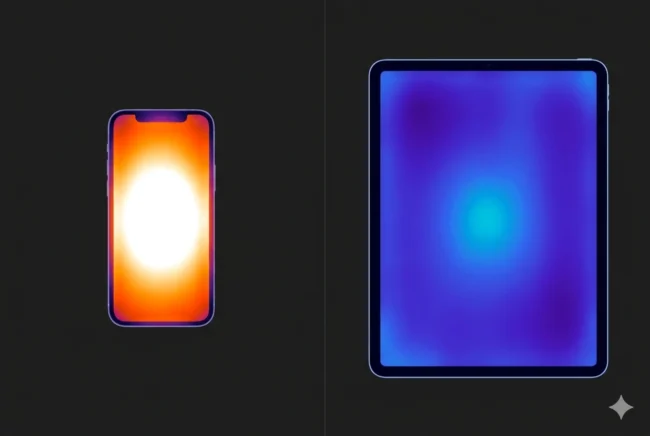
The Smartphone Constraint: In smartphone chassis, the Dimensity 9500’s Arm Mali-G1 Ultra MC12 GPU is so powerful that it often chokes on its own heat. Benchmark stress tests reveal that in a phone, the chip can throttle down to 60% performance after just six minutes of sustained heavy graphical load.
Unleashing the Mali-G1 Ultra: A tablet like the rumored Galaxy Tab S12 Ultra offers vastly more surface area for thermal dissipation. With a massive internal vapor chamber and a sprawling aluminum backplate, the Dimensity 9500 can theoretically run its GPU at maximum frequency indefinitely.
The Gaming Advantage: Because the thermal ceiling is effectively removed in a tablet form factor, leaks indicate the Dimensity 9500 is actually delivering stronger sustained gaming performance and lower peak temperatures than Qualcomm’s Snapdragon equivalent when playing heavy, unoptimized Unreal Engine titles.
The Emulation Asterisk
While the Dimensity 9500 is a rasterization powerhouse, there is one specific community that will mourn the loss of Qualcomm silicon: the emulation enthusiasts.
The Adreno Driver Legacy: For users who buy premium Android tablets specifically to run complex translation layers (like Switch or PC emulators), Snapdragon remains the gold standard. Qualcomm’s Adreno Vulkan drivers are vastly more mature and widely supported by independent developers.
Mali’s Compatibility Struggle: The Mali-G1 Ultra GPU inside the Dimensity 9500 is exceptionally fast, but MediaTek’s proprietary drivers often face graphical glitches or immediate crashes in niche emulators. If you are buying a Tab S12 to emulate desktop games, the MediaTek switch is a noticeable downgrade.
The Business Reality: Escaping the Qualcomm Tax
Beyond architectural synergy, Samsung’s decision is deeply rooted in the brutal economics of modern semiconductor manufacturing.
The 2nm Cost Crisis: As we have extensively covered, Qualcomm’s upcoming high-end processors (built on TSMC’s 2nm and 3nm nodes) are commanding astronomical wafer premiums. If Samsung relied exclusively on the Snapdragon 8 Elite Gen 5 for its entire tablet lineup, the baseline Galaxy Tab S12 Plus would likely require a $150 to $200 price hike just to maintain profit margins.
MediaTek as Leverage: By shifting its highest-margin, large-screen devices entirely to MediaTek, Samsung is sending a multi-billion dollar warning shot to San Diego. Samsung is proving they are no longer dependent on the Snapdragon brand to sell “Ultra” tier hardware.
Software Unification: By utilizing MediaTek across both the Galaxy S-series “FE” phones and the premium Tab S-series, Samsung’s software engineers only have to optimize the heavy One UI 9 codebase and Galaxy AI suite for one primary instruction set, drastically reducing development overhead.
The Verdict: A New Era for Premium Android
The Galaxy Tab S12 series is shaping up to be the ultimate test of consumer brand loyalty. For years, buyers associated the “Snapdragon” name with uncompromised, blazing-fast performance. Samsung is betting that in 2026, the consumer only cares about the end result: flawless AI integration, multi-day battery life, and stutter-free 120Hz gaming.
By taking the monstrous, 3nm Dimensity 9500 and dropping it into a massive tablet chassis where it can finally breathe without thermal throttling, Samsung is building a machine that could realistically challenge the M4 iPad Pro in sustained multi-threaded workloads.
Qualcomm hasn’t just lost a client; they have lost their monopoly on the premium large-screen Android experience. The “budget” stigma surrounding MediaTek is officially dead and buried.