The AnTuTu v11 Reality Check: Why High Scores No Longer Guarantee Smooth Gaming
For years, the AnTuTu benchmark has served as the undisputed yardstick for mobile performance. A higher score meant a faster phone. Period. But as we navigate the ultra-flagship landscape of 2026, a massive disconnect has formed between the numbers on a spec sheet and the reality on the screen.
With the release of processors like the Snapdragon 8 Elite Gen 5 and the MediaTek Dimensity 9500, we are seeing devices shatter the 4.3 million point barrier on AnTuTu v11. Yet, users are booting up demanding titles like Zenless Zone Zero, Genshin Impact, or complex PC emulators and immediately slamming into jarring micro-stutters, frame drops, and severe thermal throttling.
The benchmark era of blind trust is over. Here is the highly technical reality check on AnTuTu v11, how the scoring system actively masks hardware flaws, and why chasing the highest number no longer guarantees a smooth gaming experience.
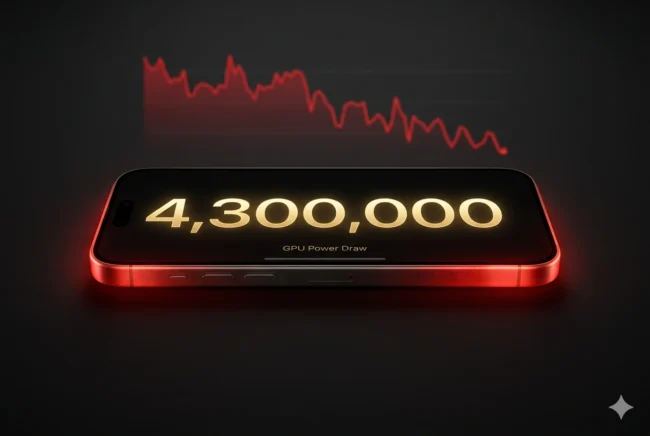
The Burst vs. Sustained Thermal Illusion
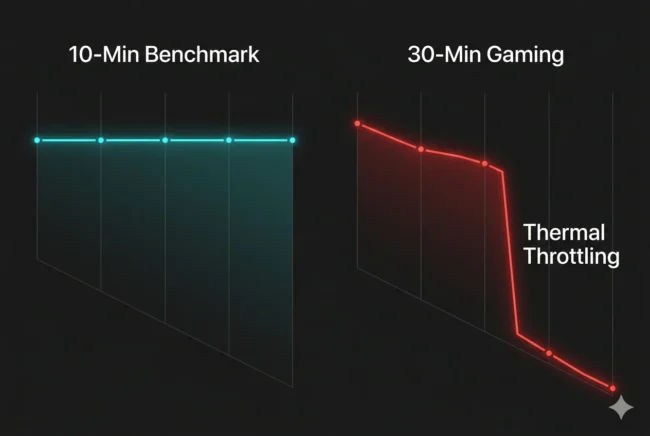
The most fundamental flaw in using AnTuTu to judge gaming performance lies in the physics of thermal mass. Gaming is a marathon; AnTuTu is a sprint.
The 10-Minute Sprint
The 30-Minute Wall
NPU and Memory Inflation
AnTuTu v11 calculates its massive “Total Score” by adding together four distinct metrics: CPU, GPU, Memory (MEM), and User Experience (UX). In 2026, the MEM and UX categories are heavily inflating the overall number, masking graphics deficiencies.
The AI Tax
The Storage Speed Trap
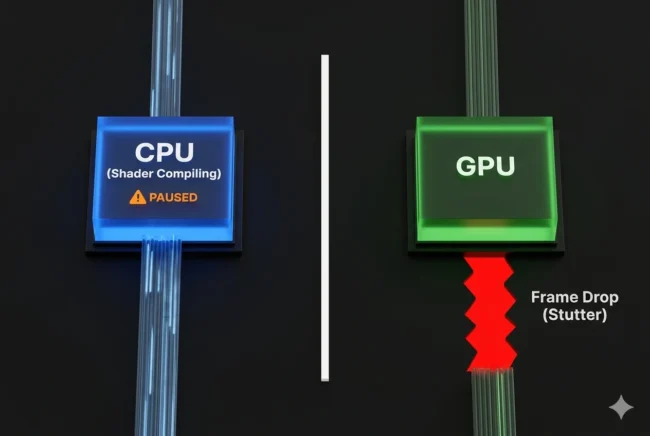
The 1% Lows and Shader Compilation
A high GPU score in AnTuTu v11 suggests the phone can push a massive amount of pixels, but it completely ignores the most important metric in modern gaming: frame pacing consistency.
Pre-Compiled vs. On-The-Fly
Destroying the 1% Lows
The Breakdown: Benchmark vs. Reality
To understand the disconnect, we must look at how AnTuTu weights its scoring versus what an actual 3D game engine demands from the hardware.
| Hardware Component | AnTuTu v11 Impact | Real-World Gaming Impact |
|---|---|---|
| GPU Rasterization | High (Boosts Total Score) | High (Determines Resolution) |
| NPU (AI Compute) | High (Massive UX Score Boost) | Zero (Currently unused in most games) |
| Peak Prime Core Clock | High (Boosts CPU Score) | Low (Causes thermal throttling) |
| Sustained Thermal Cooling | Low (Test ends before heat soak) | Critical (Prevents frame rate drops) |
| VRAM / GMEM Capacity | Medium (Boosts MEM Score) | Critical (Prevents texture stutter) |
What Mobile Gamers Should Actually Look For
If AnTuTu v11 is an unreliable metric for sustained gaming performance, how do you evaluate a 2026 ultra-flagship before buying it? You have to stop looking at the peak score and start looking at stability.
- 3DMark Wild Life Extreme Stress Test: Unlike AnTuTu, this test runs a heavy GPU workload on a continuous 20-minute loop. Instead of giving you a single high score, it gives you a Stability Percentage. A phone that scores 8,000 points with 95% stability will provide a vastly superior gaming experience than a phone that hits 11,000 points but drops to 50% stability after five minutes.
- Sustained Wattage Draw: Look for independent reviews that measure the processor’s power draw during gameplay. The Snapdragon 8 Elite Gen 5 is incredibly powerful, but if the OEM allows it to draw 15W continuously, the phone will overheat instantly. You want a device tuned for a highly efficient 5W to 7W sustained draw.
- Active Cooling Hardware: The laws of thermodynamics cannot be cheated by software. If you want uncompromising, sustained AAA gaming performance on a mobile device, prioritize phones with massive dual vapor chambers or built-in active cooling fans.
The Verdict: Don’t Buy the Number
AnTuTu v11 remains a fascinating engineering tool. It effectively demonstrates the absolute theoretical peak computing power a silicon die can achieve in a perfect, temporary vacuum. But it is not a gaming benchmark.
Smartphone manufacturers have gamified the benchmark system, optimizing their firmware to blast power to the CPU and NPU for exactly 10 minutes to secure a 4.3 million point bragging right for their marketing materials. As a consumer, you must look past the spec sheet. A phone’s ability to maintain a flat, consistent 60 FPS line graph for an hour is infinitely more valuable than a fleeting, seven-figure score that melts your battery.