
Snapdragon 8 Elite Gen 6 Graphics Leaked: Why Mobile Gamers Should Wait for 2027
While the industry continues to debate the plateauing speeds of mobile CPUs, the true revolution for 2027 lies in graphical compute. Recent supply chain leaks regarding Qualcomm’s upcoming Snapdragon 8 Elite Gen 6 lineup reveal a strategic pivot: rather than chasing marginal CPU clock speed records, Qualcomm is heavily investing in the GPU and memory architecture
For mobile gamers, emulation enthusiasts, and power users, the message is clear—the true generational leap is still a year away

The Adreno 850: A Desktop-Class Architecture
The leaks confirm a deliberate bifurcation of the 2027 flagship market into two tiers: the standard Gen 6 (SM8950) and the ultra-premium Gen 6 Pro (SM8975). The latter is where the graphical magic happens.
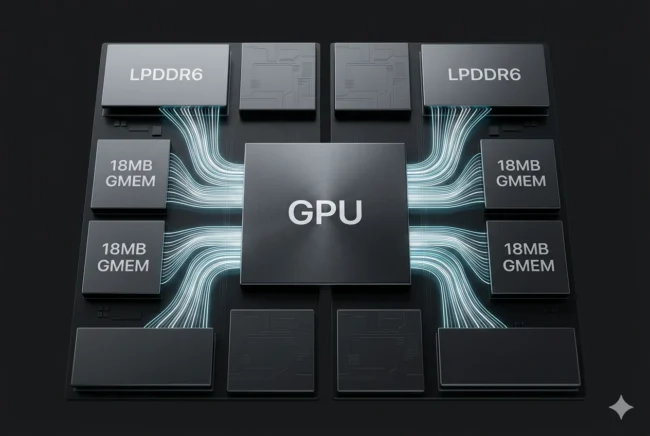
The Adreno 850 GPU, exclusive to the Pro variant, represents a massive architectural overhaul designed to handle console-level rendering pipelines and real-time ray tracing without aggressive thermal throttling
Key Graphical Upgrades in the Gen 6 Pro:
The 2nm N2P Thermal Advantage
Raw graphical horsepower is useless if a device throttles after ten minutes of gameplay. This is where TSMC’s 2nm (N2P) fabrication node changes the equation.
By shrinking the node, the Adreno 850 can either push significantly higher peak frequencies or, more importantly for sustained gaming, deliver current-generation peak performance at a fraction of the wattage.
”We are moving past the era of burst performance. The combination of the Adreno 850 and the N2P node means devices will sustain maximum frame rates in demanding 3D environments, or high-end PC emulators, while remaining remarkably cool to the touch. It’s an efficiency triumph.”
Generational GPU Comparison
| Feature | Snapdragon 8 Elite Gen 5 (Standard) | Snapdragon 8 Elite Gen 6 (SM8950) | Snapdragon 8 Elite Gen 6 Pro (SM8975) |
|---|---|---|---|
| Fabrication Node | 3nm | 2nm (N2P) | 2nm (N2P) |
| GPU Architecture | Adreno 830/840 class | Adreno 845 | Adreno 850 |
| GMEM Cache | Varies | 12MB | 18MB |
| Memory Standard | LPDDR5X | LPDDR5X | LPDDR6 |
What This Means for Emulation and Upscaling
The implications of the Adreno 850 extend far beyond native Android games. For the emulation community, the increased GMEM and LPDDR6 bandwidth are exactly what is needed to push heavy translation layers without bottlenecking.
Furthermore, Qualcomm’s proprietary frame generation and optical flow engines (expected to advance alongside this silicon) will utilize the sheer compute power to intelligently upscale graphics and interpolate frames. This means 120FPS experiences in titles previously locked at 30FPS, completely redefining the mobile gaming landscape.