Why Samsung and Xiaomi Might Ditch Qualcomm’s Best Chip Next Year
The relationship between Qualcomm and the world’s leading Android manufacturers has reached a breaking point. For over a decade, the “Snapdragon 8” series was the non-negotiable heart of every premium flagship. But as we move into the 2027 cycle, the silicon landscape is shifting. Recent supply chain data suggests that Samsung and Xiaomi are actively exploring “exit strategies” to reduce their reliance on the upcoming Snapdragon 8 Elite Gen 6 ecosystem.
This isn’t just about performance; it’s a calculated rebellion against rising costs, artificial hardware segmentation, and the strategic need for vertical integration. Here is the deep dive into why the world’s biggest OEMs are preparing to ditch Qualcomm’s “best” chip.
The Financial Breaking Point: The 2nm “Wafer Tax”
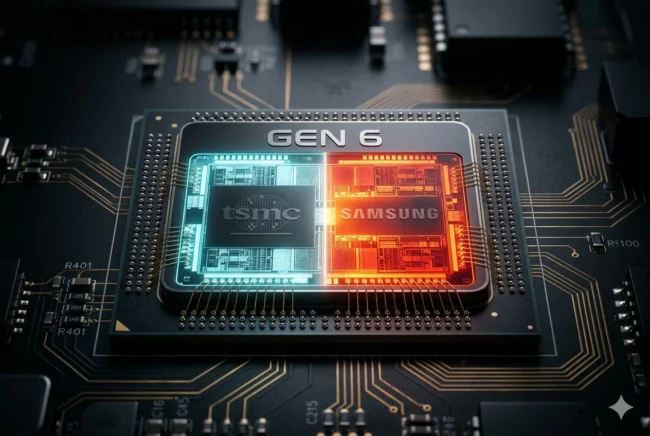
The most immediate threat to the Qualcomm monopoly is the skyrocketing cost of manufacturing. As Qualcomm moves the Snapdragon 8 Elite Gen 6 Pro (SM8975) to TSMC’s 2nm N2P process, the bill is being passed directly to the manufacturers.
The $30,000 Wafer Crisis: Reports indicate that a single 2nm wafer now costs upwards of $30,000. For OEMs like Xiaomi, who operate on razor-thin hardware margins, absorbing a 25% increase in chipset costs is no longer sustainable.
The $1,300 Baseline: If Samsung uses the Gen 6 Pro in the base Galaxy S27, the retail price would likely need to jump to $1,099 or $1,199 just to maintain current profit margins. Samsung knows the market will not tolerate a $1,200 “entry-level” flagship.
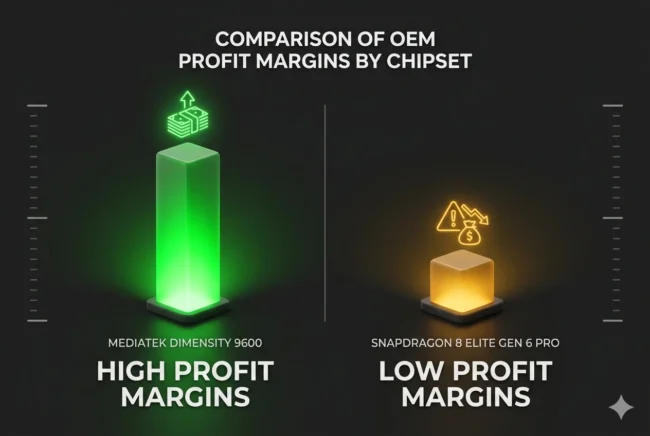
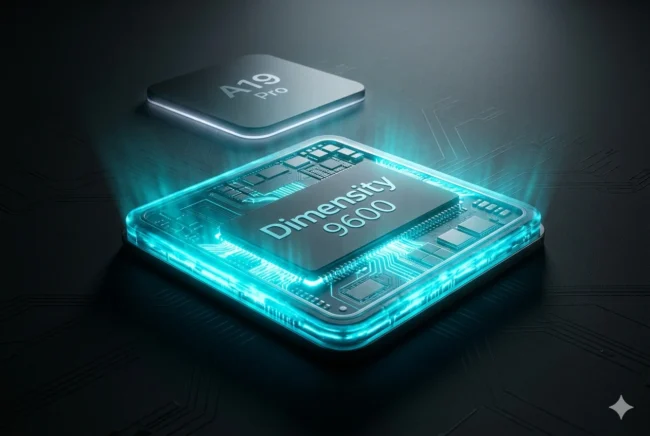
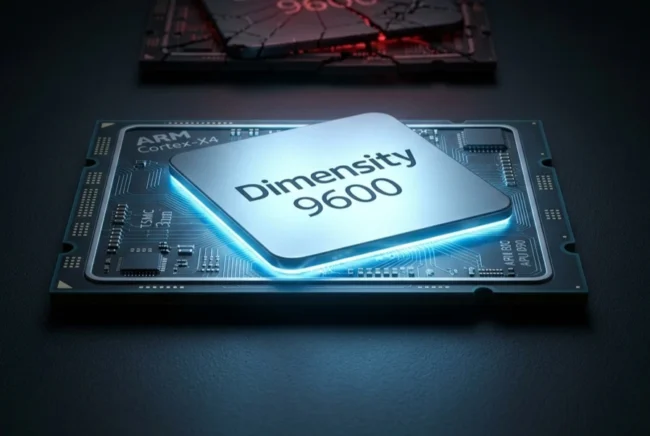
The Dimensity Alternative: MediaTek’s upcoming Dimensity 9600 is rumored to offer 95% of the Gen 6 Pro’s performance at nearly 70% of the cost. For Xiaomi’s standard flagship models, the math simply favors MediaTek.
NPU Overhead: Qualcomm is packing the Gen 6 Pro with massive AI accelerators (145+ TOPS). While impressive, many OEMs feel they are being forced to pay for “AI silicon” that their own software layers (like HyperOS or One UI) don’t fully utilize yet.
The “Standard” Chip Insult: SM8950 vs. SM8975
As we’ve previously analyzed, Qualcomm’s decision to hobble the standard Snapdragon 8 Elite Gen 6 (SM8950) has deeply offended the engineering teams at Samsung and Xiaomi.
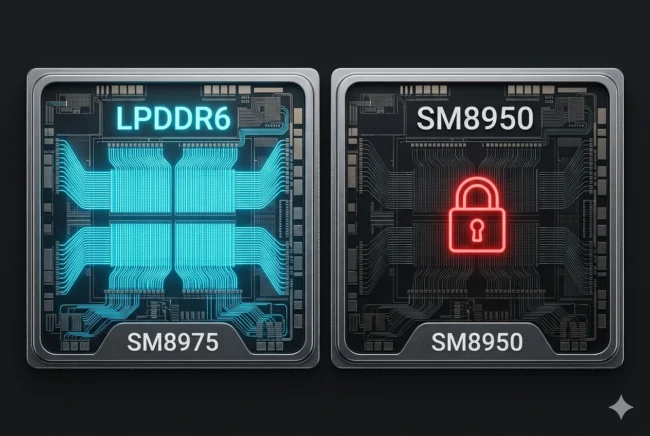
The LPDDR5X Bottleneck: By restricting the standard chip to LPDDR5X while the Pro gets LPDDR6, Qualcomm is forcing OEMs to sell “last-gen” memory speeds in 2027. Xiaomi, in particular, views this as a threat to their “speed-first” brand identity.
The Cache Deficit: The removal of the 8MB Last Level Cache (LLC) from the standard chip means it will stutter in heavy gaming and AI workloads compared to the Pro. Samsung is reportedly unwilling to ship a “Galaxy S” device that feels artificially slower than the “Ultra” variant at the silicon level.
The “Lite” Rebrand (SM8940): Qualcomm’s push to include an even lower-tier “Elite Lite” chip in the 2027 lineup is seen as a move that dilutes the premium branding that Samsung and Xiaomi have spent years building alongside the Snapdragon name.
Samsung’s Phoenix Project: The Exynos 2700 Revival
Samsung has never been comfortable with its total dependence on Qualcomm, especially in the North American market. 2027 marks the year they intend to fight back with the Exynos 2700.
The 2nm GAA (Gate-All-Around) Advantage: Samsung Foundry is betting everything on its 2nm GAA process. If the Exynos 2700 can match the efficiency of the Snapdragon 8 Elite Gen 6, Samsung can save billions by “buying from itself.”
Custom GPU Optimization: Samsung is deepening its partnership with AMD to move beyond standard RDNA architectures into a custom “Xclipse” solution specifically tuned for the Exynos 2700’s NPU, potentially outperforming Qualcomm’s Adreno 850 in ray-tracing tasks.
The “Qualcomm-Free” Galaxy: Rumors from the Suwon headquarters suggest Samsung is testing a “Qualcomm-Free” prototype of the Galaxy S27 for all regions. This is a massive leverage play to force Qualcomm to lower prices.
Xiaomi’s “Pinecone” Evolution: The Custom Silicon Dream
Xiaomi has long envied Apple’s vertical integration. To reach the next level of “premium,” Xiaomi is reportedly reviving its in-house chip project (formerly Pinecone) with a 2027 target.
Control Over Micro-Interactions: By designing their own SoC (System on a Chip), Xiaomi can optimize HyperOS 3.0 at the kernel level, achieving the “organic” UI smoothness and 120Hz consistency that general-purpose Snapdragon chips sometimes struggle to maintain.
ISP (Image Signal Processor) Independence: Xiaomi’s partnership with Leica is currently limited by what Qualcomm’s Spectra ISP allows. A custom Xiaomi chip would allow for proprietary color science and 8K/120fps video processing that Qualcomm hasn’t prioritized.
Supply Chain Resilience: Moving away from a “Qualcomm-only” strategy protects Xiaomi from the global silicon shortages we expect in 2026/2027 due to the AI server boom.
The “Bifurcation” Strategy: How the 2027 Market Will Look
If Samsung and Xiaomi do “ditch” Qualcomm’s best chip, it won’t be a total abandonment. Instead, we will see a strategic tiering that changes the consumer experience.
The “Ultra” Exclusive: The Snapdragon 8 Elite Gen 6 Pro will likely become a “luxury boutique” chip, exclusive to the S27 Ultra and the Xiaomi 17 Ultra. This justifies the $1,300+ price tags of those specific models.
The MediaTek Surge: Expect the standard Xiaomi 17 and Galaxy S27 (Global) to ship with the MediaTek Dimensity 9600. Modern benchmarks show that MediaTek has closed the gap in everything except high-end emulation.
The “Pro” Branding Confusion: Consumers will have to be more vigilant than ever. A “Snapdragon 8 Elite” badge on a standard 2027 flagship will no longer mean they are getting the top-tier 2nm N2P silicon; it will likely be the hobbled SM8950.
Final Verdict: The End of the Monarchy
The “Qualcomm Tax” has finally become too high for even the largest tech giants to ignore. By over-segmenting their lineup and passing the 2nm manufacturing costs entirely to their partners, Qualcomm has created an opening for MediaTek and in-house Exynos/Xiaomi chips to thrive.
Next year, the question won’t be “Does it have a Snapdragon?” but rather “Which Snapdragon did they hide inside?” For the power user, the only safe bet remains the Pro (SM8975), but for Samsung and Xiaomi, the “Standard” chips are a compromise they are no longer willing to make.