NVIDIA’s 2026 GPU Crisis: Why AI is Ruining Your Next PC Upgrade
The PC building community is currently staring down the barrel of an unprecedented hardware drought. If you are waiting for prices to normalize or for the next mid-cycle architectural refresh to save your 2026 PC build, you need to radically adjust your expectations.
Recent financial disclosures and supply chain leaks paint a bleak picture for the consumer desktop market. We are no longer dealing with a standard “crypto boom” shortage that will eventually stabilize. We are witnessing a fundamental, structural reallocation of global silicon, driven entirely by the insatiable enterprise demand for Artificial Intelligence.
NVIDIA has quietly transitioned from a gaming company that dabbles in enterprise, to a trillion-dollar data center behemoth that keeps a gaming division merely for legacy branding. Here is the comprehensive breakdown of the 2026 GPU crisis, the manufacturing bottlenecks, and why the AI revolution is actively ruining your next PC upgrade.
The 9% Reality: Why Gamers Are Now Second-Class Citizens
To understand why you cannot find an affordable high-end GPU, you only need to look at NVIDIA’s recent fiscal reporting for early 2026. The financial incentive to cater to gamers has evaporated.
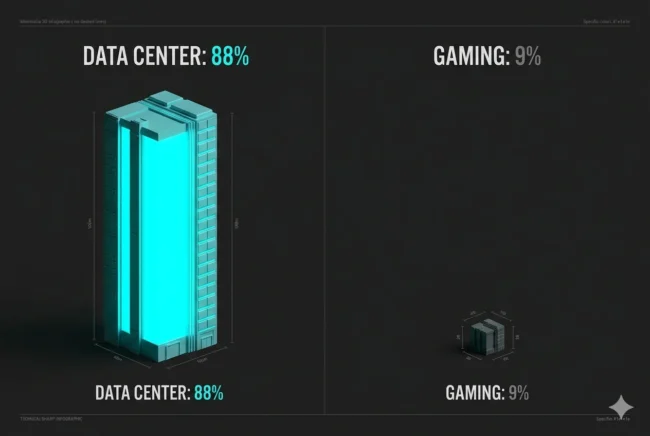
The Revenue Flip: NVIDIA is currently pulling roughly 88% of its revenue from data centers, while the gaming division has shrunk to a mere 9%. Just a few years ago, these numbers were reversed.
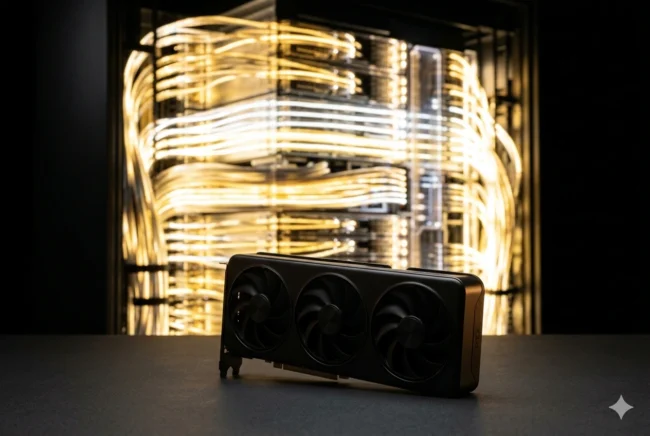
The Blackwell B200 Priority: Every single piece of premium silicon coming off the line is being evaluated for enterprise use first. A B200 AI accelerator commands an astronomical margin that a consumer RTX 5090 simply cannot match.
Production Slashes: Supply chain insiders confirm that NVIDIA is actively cutting consumer GeForce RTX 50-series production by 30% to 40% in the first half of 2026. This isn’t a mistake; it is a calculated throttling to free up manufacturing capacity for hyperscalers like Microsoft and Meta.
The Death of “Budget” Tiers: Because high-margin AI chips are the priority, the $300–$400 mid-range market has been effectively abandoned. The silicon required to make a truly powerful “budget” card is too valuable to be sold at consumer price points.
The GDDR7 Hostage Situation
The shortage isn’t just about the GPU dies; it is heavily tied to a catastrophic bottleneck in memory production.
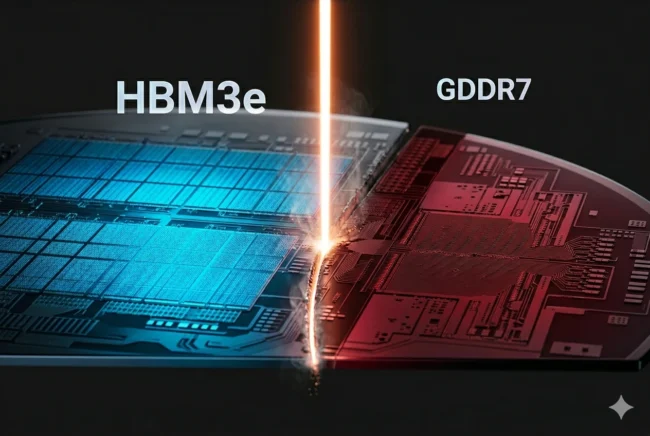
The GDDR7 Premium: The new RTX 50-series relies on cutting-edge GDDR7 memory. However, suppliers like SK Hynix and Samsung are prioritizing HBM3e (High Bandwidth Memory) for enterprise AI over GDDR7 for gaming.
VRAM Starvation: To maintain profit margins amidst this memory shortage, NVIDIA is prioritizing lower-memory consumer variants. Models like the standard RTX 5060 Ti are being aggressively pushed with 8GB of VRAM, while high-capacity 16GB models are entering “end-of-life” status or facing severe scarcity.
The Price Hike: Because GDDR7 is difficult to yield and heavily contested, baseline prices across the entire RTX 50 lineup are expected to rise by up to 30% by Q3 2026.
The AI VRAM Irony: The cruelest irony for creators and developers is that localized AI tasks (like running LLMs) require massive amounts of VRAM. Yet, the enterprise AI boom is the exact reason consumers cannot buy high-VRAM cards for local development.
TSMC’s Brutal Math: 1 AI GPU = 6 iPhones
The final piece of the shortage puzzle lies in Taiwan. TSMC (Taiwan Semiconductor Manufacturing Company) physically cannot print chips fast enough to satisfy the AI hype train.
Zero-Sum Capacity: TSMC’s bleeding-edge 2nm and 3nm nodes are entirely sold out. There is no excess capacity. Every wafer allocated to a consumer processor is a wafer taken away from a data center.
The Physics of Profit: A single enterprise AI GPU die is massive—often exceeding 800 square millimeters. For context, TSMC could print six to eight mobile smartphone chips in the same physical space. NVIDIA is bidding against consumer giants, and because of their margins, they are winning.
The Priority Shift: In a historic industry shift, NVIDIA has officially displaced Apple as TSMC’s largest revenue contributor. This means the consumer tech world no longer dictates the fabrication schedule.
The Foundry Fallout: As we noted in our recent analysis of the foundry landscape, this capacity war is exactly why tech giants are scrambling to diversify, pushing companies to explore Intel’s 18A node just to guarantee their own consumer silicon pipelines.
How to Survive the 2026 Drought
For the power user who demands extremely lightweight, blazing-fast performance without bloated hardware costs, 2026 requires strict discipline.
Hold Your Hardware: If you own an RTX 40-series card, specifically a 4080 or 4090, do not sell it. The secondary market is about to experience massive inflation.
Focus on System Architecture: Instead of chasing a $1,500 GPU upgrade, invest in ultra-low latency NVMe drives or high-speed DDR5 memory to ensure your current rendering pipelines remain as lightweight and efficient as possible.
Reject the 8GB Trap: Do not purchase any 2026 GPU with 8GB of VRAM, regardless of the core clock speed. Modern AAA titles and local AI workflows will stutter and choke on such a narrow memory bus.
Wait for the Dust to Settle: The AI bubble will eventually mandate a massive oversupply of fabrication plants. Until the new foundries in Arizona and Ohio come fully online in late 2027, the consumer graphics market is a seller’s playground. Save your cash.
Tech ReviewerFounder & Publisher: Sole operator and lead technical architect of MultiCore Performance
Areas of Expertise:
Silicon & Hardware Benchmarking: Firsthand performance testing and analysis of flagship processors specifically evaluating thermal and rendering capabilities in gaming and video editing workloads.,