What Happens if ARM Actually Bans Snapdragon? The 2026 Oryon Core Crisis Explained
The semiconductor world is holding its breath. Following the explosive May 2026 revelation that the U.S. Federal Trade Commission (FTC) has launched a sweeping antitrust probe into ARM Holdings, the industry’s focus has snapped back to the ongoing legal war between ARM and Qualcomm.
While Qualcomm secured a “full and final judgment” in September 2025 defending its custom Oryon cores, ARM has aggressively appealed the decision to the Third Circuit. The threat of a canceled architecture license—the “nuclear option” first brandished in late 2024—remains a lingering shadow over the entire smartphone and PC landscape.
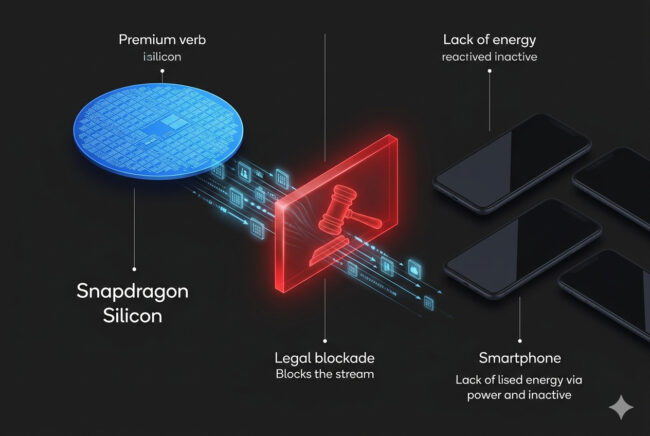
If ARM’s appeal succeeds and they are granted the power to actively ban Snapdragon processors utilizing the Nuvia-derived Oryon architecture, the hardware ecosystem will experience a catastrophic reset. Here is a comprehensive breakdown of the “Oryon Core Crisis,” the implications of the FTC probe, and what a total Snapdragon ban would actually mean for the devices in your pocket.
The Core of the Crisis: The Nuvia Dispute
To understand the doomsday scenario, you must understand the genesis of the conflict. The war is fundamentally about who controls the right to innovate on top of the ARM instruction set.
The $1.4 Billion Acquisition: In 2021, Qualcomm purchased Nuvia, a silicon startup founded by former Apple engineers. Qualcomm needed Nuvia’s custom architecture to escape the performance plateau of standard ARM Cortex designs and directly challenge Apple Silicon’s M-series. This custom architecture became the Oryon Core.
The Licensing Conflict: ARM argued that Nuvia’s specific architecture license could not simply be transferred to Qualcomm without consent—and without negotiating a significantly higher, device-level royalty rate. ARM subsequently demanded the destruction of all Nuvia-based designs.
The 2025 Legal Victory: A Delaware jury in late 2024, followed by a final judicial ruling in September 2025, sided with Qualcomm. The court ruled that Qualcomm’s overarching Architecture License Agreement (ALA) legally covered the Nuvia developments, theoretically ending ARM’s attempts to claw back the technology.
The 2026 Appeal: Unwilling to accept the loss of billions in potential leverage, ARM has filed official appeals. This legal maneuvering keeps the theoretical threat of an injunction alive just as Qualcomm prepares to mass-produce its 2027 Snapdragon 8 Elite Gen 6 roadmap.
Scenario 1: The Immediate Hardware Blackout
If the appellate courts shock the industry and side with ARM, granting an injunction against Oryon-based silicon, the fallout for the mobile market would be instantaneous and devastating.
The Halt of Snapdragon 8 Elite: The current Snapdragon 8 Elite (Gen 5) and the highly anticipated Gen 6 processors completely rely on the Oryon V4 and V5 architectures. A legal injunction would bar Qualcomm from fabricating, importing, or selling these chips, instantly paralyzing the premium Android market.
OEM Supply Chain Collapse: Manufacturers like Samsung, Xiaomi, and OnePlus build their entire flagship roadmaps around Qualcomm. If Snapdragon shipments halt, OEMs would have no premium silicon to place in their $1,000+ devices, leading to canceled launches and massive revenue shortfalls.
The MediaTek Monopoly: The immediate benefactor of a ban would be MediaTek. As we have seen with the sheer power of the Dimensity 9600, MediaTek has the silicon to step in. However, giving one company an overnight monopoly on premium Android chips would inevitably lead to massive price gouging and severely constrained global supply.
Inventory Seizures: In the most extreme legal scenario, ARM could demand that existing, unsold inventory of Oryon-based laptops and smartphones be pulled from retail shelves, creating a multi-billion dollar write-down for global retailers.
Scenario 2: The Collapse of the AI PC Ecosystem
Beyond smartphones, a Snapdragon ban would effectively terminate Microsoft’s most ambitious hardware initiative in a decade, sending the PC market into turmoil.
The Windows-on-ARM Reliance: The entire “Copilot+ PC” platform was successfully launched on the back of the Snapdragon X Elite and X Plus processors. These chips were the first to feature the custom Oryon cores, delivering the massive NPU TOPS and battery efficiency needed to rival Apple’s MacBooks.
Intel and AMD’s Relief: A ban on Snapdragon X-series chips would hand the mobile computing market right back to Intel (with the upcoming Nova Lake platform) and AMD (with Zen 6). The competitive pressure that is currently forcing x86 architectures to become more power-efficient would vanish overnight.
Software Stagnation: Microsoft has spent years optimizing Windows 11 for the Oryon architecture. If the hardware disappears from the market, software developers will instantly abandon native ARM64 application development, dooming the Windows-on-ARM transition for the second time in history.
Scenario 3: The RISC-V Escape Hatch
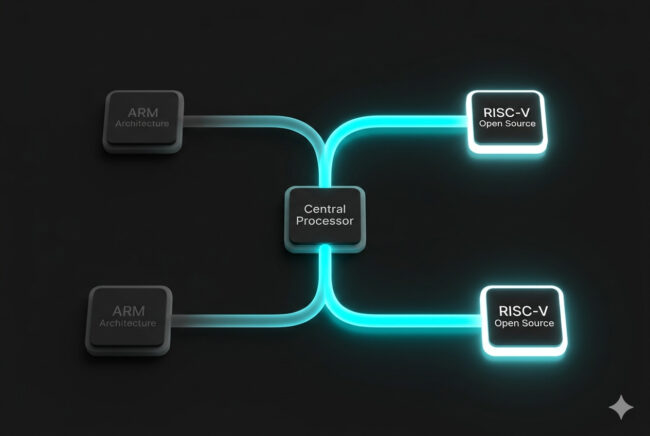
Qualcomm is not waiting passively to find out how the appeal resolves. The “Oryon Crisis” has accelerated the industry’s most significant architectural pivot away from ARM.
The RISC-V Pivot: If ARM legally weaponizes its instruction set, Qualcomm will be forced to abandon the ARM architecture entirely. Qualcomm is already heavily investing in RISC-V, an open-source instruction set architecture (ISA) that carries no royalty fees and cannot be arbitrarily canceled by a single corporate entity.
The “Qualcomm-Ventana” Alliance: Supply chain rumors from early 2026 suggest Qualcomm is already prototyping premium RISC-V cores in partnership with Ventana Micro Systems. An ARM ban would turn these long-term R&D projects into emergency, priority-one product launches for the 2028 cycle.
The Translation Layer Nightmare: Transitioning Android and Windows from ARM to RISC-V would be a monumental software challenge. Every legacy application would need to run through a heavy translation layer during the transition years, resulting in severe performance degradation and battery life penalties for the end-user.
The May 2026 FTC Intervention
The sheer catastrophic potential of an ARM ban is exactly why the United States government has finally stepped into the fray.
The Antitrust Probe: In mid-May 2026, reports surfaced that the U.S. Federal Trade Commission (FTC) has launched a formal antitrust investigation into ARM. The core of the probe is assessing whether ARM is illegally downgrading or threatening to reject licensing agreements to stifle competition and monopolize the semiconductor market.
Protecting U.S. Innovation: Qualcomm is a crown jewel of American semiconductor engineering. The FTC recognizes that allowing a British-based IP holder to effectively veto the roadmap of an American hardware giant presents a severe threat to global tech stability and national economic interests.
Leverage for Settlement: The FTC investigation provides massive leverage for Qualcomm. It heavily incentivizes ARM to quietly settle the appeals process rather than risk facing federal antitrust lawsuits that could fundamentally alter their licensing business model worldwide.
The Verdict: A Cold War in Silicon
The probability of ARM successfully banning the Snapdragon Oryon cores remains mathematically low, given Qualcomm’s “full and final” district court victories in 2025. However, the 2026 appeal and the subsequent FTC antitrust probe prove that the architectural foundation of the tech world is highly unstable.
The “Oryon Core Crisis” is no longer just a contract dispute; it is a battle for the future of custom silicon. Whether the industry remains locked into the ARM ecosystem or makes the painful, complex jump to RISC-V, the days of blind trust between chip designers and IP holders are over. The silicon cold war has officially begun.
Tech ReviewerFounder & Publisher: Sole operator and lead technical architect of MultiCore Performance
Areas of Expertise:
Silicon & Hardware Benchmarking: Firsthand performance testing and analysis of flagship processors specifically evaluating thermal and rendering capabilities in gaming and video editing workloads.,