MediaTek Dimensity 9500 Dedicated Gaming Spec Sheets And Review
Manufacturer: MediaTek
Model Number: Dimensity 9500
Release/Date Quarter: 2025/2026
Class/Tier: AAA Flagship, Enthusiast PC Emulation, High-Refresh eSports
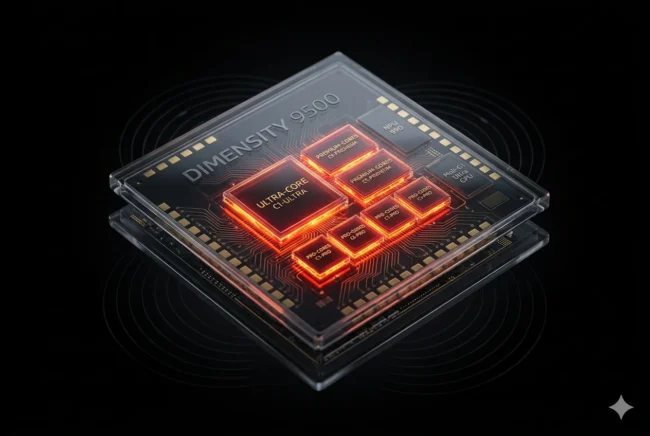
Architecture: Features TSMC’s 3nm N3P node and an aggressive “All Big Core” CPU topology spearheaded by a 4.21 GHz C1-Ultra core.
Raw Compute: Shatters traditional performance ceilings with an astonishing 5.27 TFLOPS of FP32 compute power via the 12-core Mali-G1 Ultra GPU.
Rendering Mastery: Boasts native Unreal Engine 5.5+ integration (Nanite & MegaLights) alongside a 2nd Gen Raytracing pipeline.
Emulation Realities: Executes PC emulation tasks with heavy brute force, pushing 40-60 FPS in Grand Theft Auto V via Winlator/Mobox translation layers.
Thermal Reality: A peak power draw of ~11-12W forces aggressive throttling, dropping performance to 60% capability within 6 minutes under standard passive cooling.
🏆 MultiCore Performance Overall Score
Overview & Core Features
🎯 Gaming Overview And Tier
Display Engine & Target Resolution
Target Gaming Tier
AAA Flagship, Enthusiast PC Emulation, High-Refresh eSports
Max On-Device Refresh Rate
WQHD+ at 180Hz / 1.5K at 165Hz
External Display Gaming
8K @ 30 Hz / 4K @ 120Hz
Variable Refresh Rate (VRR)
Yes (1Hz to 180Hz)
⚙️ Core Graphics Engine
GPU Architecture & Raw Compute Power
GPU Name
Arm Mali-G1 Ultra MC12 (MP12)
Process Node
3 nm (TSMC 3rd Gen N3P)
GPU Architecture
5th Generation Arm GPU Architecture
Max Clock Speed
1716 MHz
Compute Power
5.27 TFLOPS (FP32)
Graphics api
Vulkan 1.4, OpenCL 3.0 FP, DirectX 12.1, OpenGL ES 3.2
⚡Silicon-Level Gaming Tech
Hardware Ray Tracing & Smart Upscaling
Hardware Ray Tracing
Yes (2nd Gen Raytracing Pipeline, Single Ray Model)
Super Resolution (upscaling)
Yes (Arm Accuracy Super Resolution)
Frame Generation
Supported (MediaTek Frame Rate Converter 3.0)
Variable Rate Shading
Supported
💾 Gaming Memory
Graphics Cache & Bandwidth Speeds
Dedicated Graphics Cache
Write-through system cache (Size N/A)
Max Memory Support
LPDDR5X (up to 24 GB)
Memory Bandwidth
85.3 GB/s
System Cache (SLC)
10 MB (paired with 16 MB L3 Cache)
🪄 Advanced Rendering Features
Frame Interpolation & Engine Optimizations
Frame Interpolation Engine
Yes (MediaTek Frame Rate Converter 3.0)
Game Engine Optimization
Unreal Engine 5.5+ Native Integration (Nanite & MegaLights)
Global Illumination
Yes (Surfel-based and Single Ray Model RT)
Mesh Shading
Yes
🕹️ Real-World Gaming Performance
eSports & High Refresh Rate
Heavy AAA & GPU Stressers
PC Emulation & Translation (Winlator / Mobox)
Gaming Benchmarks & Thermals
Raw GPU Brute Force Tests
Next-Gen Lighting & Ray Tracing Scores
Endurance & Thermal Stability
MultiCore Performance Final verdict
| CRITERIA | RATING | EXPLANATION |
|---|---|---|
| Raw GPU Performance | ⭐⭐⭐⭐⭐ | The 12-core Mali-G1 Ultra pushes an incredible 5.27 TFLOPS, dominating synthetic metrics like Steel Nomad Light. |
| PC Desktop Emulation | ⭐⭐⭐⭐ | Operates GTA V between 40-60 FPS; impressive, though Mali driver compatibility isn’t quite as universal as Adreno just yet. |
| Thermal Stability | ⭐⭐⭐ | Struggles inside passively cooled chassis, plunging to 60% total performance by the 6-minute mark. |
| Memory Architecture | ⭐⭐⭐⭐ | Backed by a healthy 85.3 GB/s memory bandwidth and a 10 MB SLC to keep up with intense memory-bound engines. |
🛒 Where Dimensity 9500 Stands for Games
| ✔️Yes if | ❌ No if |
|---|---|
| You want top-tier rasterization power capable of crushing UE5 mobile titles. | You game on heavy load for hours without using an active snap-on cooling fan. |
| You prioritize sustained 120 FPS performance in top-tier eSports games. | You demand perfectly unthrottled performance straight out of a passive glass chassis. |
| You want raw 5.27 TFLOPS hardware to experiment with advanced rendering techniques. | You rely heavily on bespoke open-source Turnip drivers which favor Snapdragon GPUs. |

[…] Dedicated “Gaming” Specs Sheet For Dimensity 9500 […]