Intel’s Apple Foundry Deal: The Surprising Reason Intel is Gaining on NVIDIA
In early May 2026, the semiconductor industry experienced a seismic shock. According to supply chain leaks and financial reports, Apple and Intel Reached a preliminary agreement for Intel Foundry Services (IFS) to manufacture future generations of Apple Silicon. Six years after Apple publicly abandoned Intel processors to build the M-series, Tim Cook is returning to Intel—this time, to utilize their fabrication plants.
While the internet is hyper-focused on the irony of an “Intel-Inside” Mac returning in 2027, the true industry ramification has nothing to do with laptops. This deal is the ultimate Trojan Horse. By securing Apple as a client, Intel has quietly acquired the exact weapon it needs to dismantle NVIDIA’s 92% monopoly in the AI datacenter market.
Here is a comprehensive breakdown of the Apple-Intel deal, the TSMC bottleneck, and why this single contract is the catalyst for Intel’s resurgence against NVIDIA.
The Details of the 2026 Apple-Intel Deal
The preliminary agreement is not a complete departure from TSMC, but a calculated diversification strategy utilizing Intel’s most bleeding-edge nodes under CEO Lip-Bu Tan’s aggressive foundry pivot.
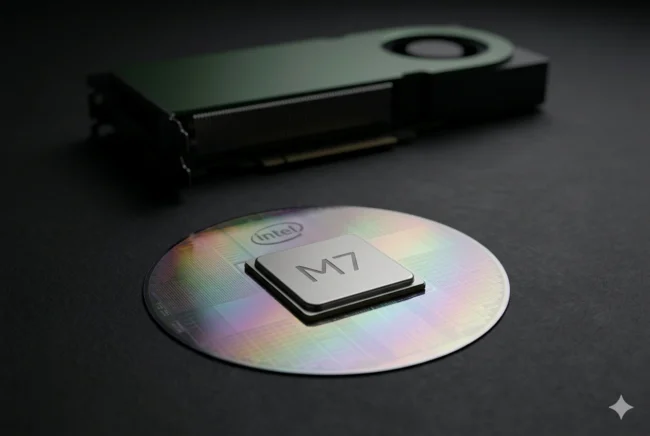
The M7 Base SoC on 18A-P: Apple is reportedly shifting the base-level M7 chips (destined for the 2027 entry-level MacBook Air and iPad Pro) to Intel’s 18A-P process. This node promises an 18% power saving over standard 18A, perfectly aligning with Apple’s fanless laptop requirements.
The A21 iPhone Silicon on 14A: For the 2028 iPhone 20 cycle, Apple is evaluating Intel’s next-generation 14A node (1.4nm-class) for the A21 chip, utilizing High-NA EUV lithography machines that Intel secured ahead of TSMC.
Volume and Revenue: Apple requires roughly 15 to 20 million base M-class chips annually. This guarantees Intel billions in recurring foundry revenue, instantly stabilizing their massive fabrication investments in Arizona and Ohio.
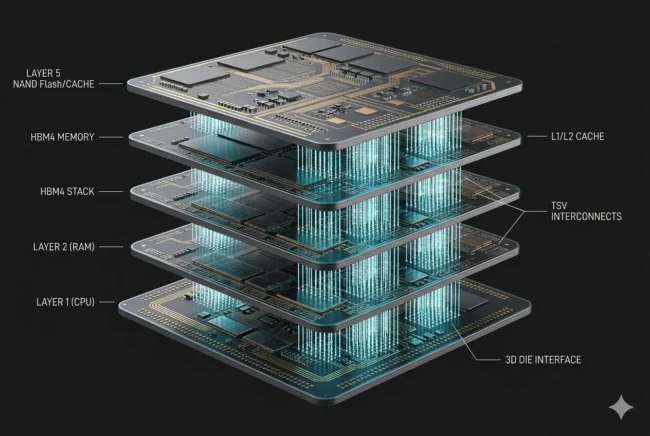
Advanced Packaging Synergy: The deal allegedly includes extensive trials with Intel’s Foveros Direct and EMIB 3D packaging, techniques Apple desperately needs as its “Ultra” chips grow too large for standard monolithic dies.
Why Apple Was Forced to Move (The TSMC Bottleneck)
Apple did not choose Intel out of goodwill; they were forced to diversify because of NVIDIA’s insatiable appetite for AI silicon.
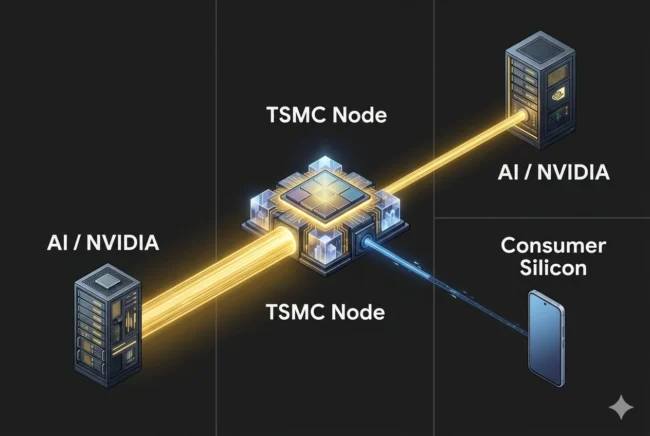
The AI Chokehold: TSMC’s N3 and upcoming N2 capacity is entirely consumed by hyperscalers buying NVIDIA Blackwell GPUs and custom AI accelerators.
iPhone 17 Constraints: During recent 2026 earnings calls, Apple admitted that supply constraints for the A19 Pro chip directly impacted iPhone 17 availability. TSMC simply could not balance Apple’s massive consumer volume with NVIDIA’s high-margin enterprise demands.
Pricing Power Loss: As long as Apple relied 100% on TSMC, they had no leverage to negotiate wafer prices. Introducing Intel as a viable second source forces TSMC to compete, preventing runaway manufacturing costs.
Geopolitical Hedging: With over 50% of its preliminary capacity locked in Taiwan, Apple views Intel’s U.S.-based fabs as a necessary insurance policy against global supply chain disruptions.
How the Apple Deal Threatens NVIDIA
At first glance, making chips for laptops seems unrelated to the trillion-dollar AI war. However, Apple’s validation fundamentally alters Intel’s trajectory in the data center space, posing a direct threat to NVIDIA’s dominance.
The “Gold Standard” Validation: Apple is notoriously the most demanding client in the semiconductor world, demanding near-perfect yield rates. By trusting Intel 18A-P, Apple signals to the rest of the industry (Microsoft, Amazon, Broadcom) that Intel’s foundries are equal to TSMC.
The Hyperscaler Exodus: Once Intel Foundry is validated by Apple, major cloud providers will feel confident moving their custom AI ASIC designs to Intel. This directly eats into NVIDIA’s market share as companies build their own custom silicon instead of buying expensive B200 GPUs.
Funding Intel’s AI War Chest: The massive, guaranteed cash flow from Apple allows Intel to aggressively fund its own AI hardware divisions. The revenue from MacBook chips will subsidize the R&D for Intel’s upcoming Gaudi and Falcon Shores AI accelerators, allowing Intel to undercut NVIDIA on price.
NVIDIA’s Supply Chain Vulnerability: NVIDIA is a “fabless” company. They design chips but own zero factories. They are entirely reliant on TSMC. If TSMC struggles with next-generation yields, NVIDIA halts. Intel, however, is building a vertically integrated empire. They will soon be able to design and build their own AI chips simultaneously, removing external bottlenecks.
The CoWoS vs. Foveros Packaging War
The most critical battleground in AI right now isn’t the nanometer node; it is the packaging. Connecting massive GPUs to High Bandwidth Memory (HBM) requires microscopic precision.
TSMC’s CoWoS Limitation: NVIDIA’s biggest constraint in 2025 and 2026 has been TSMC’s CoWoS (Chip-on-Wafer-on-Substrate) packaging capacity. They simply cannot package the chips fast enough.
Intel’s Foveros Advantage: Intel has pioneered its own advanced 3D stacking technology called Foveros and EMIB.
The Ultimatum: If Apple helps Intel refine its Foveros packaging for consumer chips, Intel will scale that technology for enterprise AI. Eventually, NVIDIA may be forced to use Intel Foundry for packaging simply because TSMC cannot keep up with global AI demand.
The Final Verdict
The Apple-Intel foundry agreement of 2026 is a masterclass in shifting leverage. Apple solves its iPhone supply bottlenecks, while Intel secures the cash and industry validation needed to execute its comeback.
For NVIDIA, the warning signs are flashing. While they currently hold the crown in AI software (CUDA) and performance, their reliance on a single manufacturing partner (TSMC) is a structural weakness. Intel is no longer just a struggling CPU maker; backed by Apple’s billions, it is rapidly becoming the western world’s premier foundry, uniquely positioned to attack NVIDIA’s AI empire from the ground up