The RTX 50 Super is Dead: What NVIDIA’s 2026 GPU Shortage Means for Gamers
For nearly a decade, the “Super” or “Ti” mid-cycle refresh has been the tactical heartbeat of the GPU market. It served as a course correction—a way for NVIDIA to offer more VRAM or better price-to-performance eighteen months after a new architecture launched. But in 2026, the safety net is being pulled away.
Internal supply chain shifts and manufacturing bottlenecks have confirmed a grim reality: the RTX 50 Super series is dead on arrival. NVIDIA is not just skipping a refresh; they are fundamentally restructuring how they distribute silicon in a world where gaming is no longer their primary revenue driver.
For the tech-savvy builder and the performance-obsessed gamer, the implications are systemic. Here is why the 2026 shortage is different, and why the “wait for the Super” strategy has officially failed.
The Death of the Mid-Cycle Refresh
The decision to cancel the RTX 5070 Super and 5080 Super is not a choice made by the gaming division, but a mandate from the datacenter division.
Silicon Prioritization: Every Blackwell die (GB202, GB203) used for a consumer “Super” card is a die that could have been binned for a high-margin B200 AI accelerator. With AI demand still outstripping supply by 3:1, NVIDIA has no financial incentive to create more consumer SKUs.
The End of Price-Correction: Usually, “Super” cards launch at the same price as the base models, effectively lowering the price of the original cards. Without this launch, the base RTX 5080 and 5090 will likely maintain their MSRP (or higher) throughout their entire three-year lifecycle.
Engineering Redirection: NVIDIA’s hardware engineers have reportedly been moved off the “Blackwell Refresh” project to accelerate the 2028 “Rubin” architecture (RTX 60 series), leaving the current 50-series as the only option for the foreseeable future.
The GDDR7 Scarcity Crisis
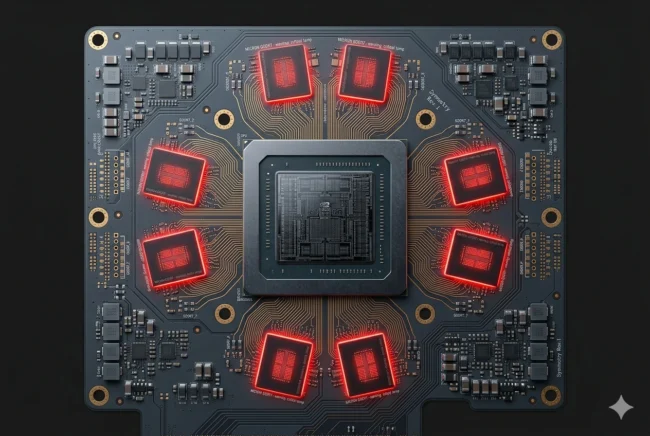
If the silicon shortage wasn’t enough, the transition to GDDR7 memory has become a logistical nightmare that is specifically throttling the mid-range market.
Yield Issues: While Samsung and Micron have begun mass production, the “Golden Samples” required for the high clock speeds of a “Super” refresh are becoming increasingly rare.
The 3GB Module Bottleneck: NVIDIA’s plan to move to 3GB GDDR7 modules (enabling 18GB or 24GB vRAM on mid-range cards) has been delayed. Production lines are currently locked into 2GB modules to satisfy the massive 5090 demand, leaving no room for the specialized high-capacity modules a “Super” refresh would require.
Cost Creep: GDDR7 currently carries a 40% price premium over GDDR6X. Adding more of this memory to “Super” cards while maintaining consumer price points is a mathematical impossibility in the current economy.
The $600 Vacuum: The Mid-Range Desert
With the “Super” cards gone, the gap between the entry-level 50-series and the high-end enthusiasts is wider than ever.
The RTX 5070 Stagnation: Without a “Super” version to push it, the standard RTX 5070 (likely featuring 12GB of VRAM) will remain the standard for 1440p gaming until late 2027.
Secondary Market Inflation: Because there is no new “mid-cycle” hardware to drive prices down, used RTX 40-series and 30-series cards are holding their value unnaturally well. The $400–$600 price bracket is effectively a “dead zone” for new, high-performance hardware.
AMD’s Opportunity (or Lack Thereof): While this would traditionally be a gap for AMD’s RDNA 4 to exploit, rumors suggest Radeon is also facing TSMC wafer constraints, preventing them from flooding the market with cheaper alternatives.
Total Cost of Ownership (TCO) for Builders
Building a PC in 2026 requires a different financial mindset. The “Super” cancellation affects more than just the GPU; it affects the entire build philosophy.
Power Supply Lock-in: The 50-series Blackwell architecture requires strict adherence to ATX 3.1 standards. Without a “Super” refresh to potentially optimize power curves, builders must over-spec their PSUs now to ensure they can handle the aggressive transient spikes of the current base models.
Thermal Management: The base 50-series cards are notoriously hot. Builders waiting for “more efficient Super designs” are essentially waiting for a product that doesn’t exist. You must invest in high-end thermal solutions (360mm+ AIOs or high-flow cases) for the current silicon today.
Longevity Concerns: Buying a base 50-series card in 2026 feels like buying “old” tech, yet it is the “newest” tech available. This creates a psychological barrier for builders who are used to the 24-month upgrade cycle.
Strategic Recommendations: What Should You Buy?
Since the “wait and see” approach is no longer viable, gamers must pivot their strategy to avoid being caught in the 2027 stagnation.
The 5090 or Nothing: If you have the budget, the RTX 5090 is the only card in the lineup with enough “excess” performance to survive a 3-year refresh cycle without feeling obsolete.
Ignore the “Super” Rumors: Any leak claiming a “Super” card is “just around the corner” is likely clickbait or based on outdated 2024 roadmap data. Build for the hardware that is on the shelf today.
Invest in Display Technology: Since GPU jumps are slowing down, move your budget into OLED or high-refresh-rate monitors. A better screen can make a 5070-level experience feel more “next-gen” than a 5080 on a mediocre panel.
Local AI as the Metric: When choosing between a used 4090 and a new 5080, prioritize the 5080’s NPU and GDDR7 bandwidth. Even without a “Super” refresh, the architectural advantages for localized AI models (LLMs) make the 50-series a better long-term “smart” investment.
Final Verdict
The cancellation of the RTX 50 Super series marks the end of the “Consumer First” era at NVIDIA. We are now living in a world where gaming hardware is a byproduct of AI development. If you need a GPU, buy the best Blackwell card you can afford today. There is no cavalry coming in 2027 to save the mid-range market.
Keywords:RTX 50 Super Canceled, NVIDIA GPU Shortage 2026, GDDR7 Scarcity, Blackwell GPU Specs, RTX 5080 vs 5090, PC Gaming Hardware Trends, GPU Price Inflation.
Tech ReviewerFounder & Publisher: Sole operator and lead technical architect of MultiCore Performance
Areas of Expertise:
Silicon & Hardware Benchmarking: Firsthand performance testing and analysis of flagship processors specifically evaluating thermal and rendering capabilities in gaming and video editing workloads.,