Cost of Custom Silicon: Unpacking the Latest Steam Deck 2 Hardware Leaks
When Valve launched the original Steam Deck, they did more than just release a new piece of hardware; they fundamentally created the modern handheld PC gaming market. By combining a heavily optimized Linux operating system with a bespoke, semi-custom AMD APU, they proved that AAA gaming was viable away from the desktop. However, the hardware landscape has shifted violently since 2022.
Today, the market is flooded with competitors wielding off-the-shelf silicon like the Ryzen Z1 Extreme, and upcoming architectures like Intel’s Panther Lake threaten to push mobile graphical fidelity even further. With the Steam Deck approaching its fourth birthday, the community is desperate for a true successor.
Recent leaks from the supply chain, combined with direct comments from Valve’s engineering team, have painted a shocking picture of what the next generation entails. Valve is not rushing to market. Instead, they are completely rethinking their silicon procurement strategy. Here is the comprehensive, highly technical breakdown of the latest Steam Deck 2 hardware leaks, the rumored shift to off-the-shelf APUs, and why 2028 is the new target for handheld dominance.
The Death of the Semi-Custom APU?
The original Steam Deck’s “Aerith” APU (and the OLED’s “Sephiroth” shrink) was a masterclass in semi-custom engineering. Valve worked intimately with AMD to design a chip specifically tuned for the 5W to 15W power envelope, pairing four Zen 2 cores with eight RDNA 2 compute units. But the leaks suggest this bespoke approach might be dead.
A Paradigm Shift in Procurement
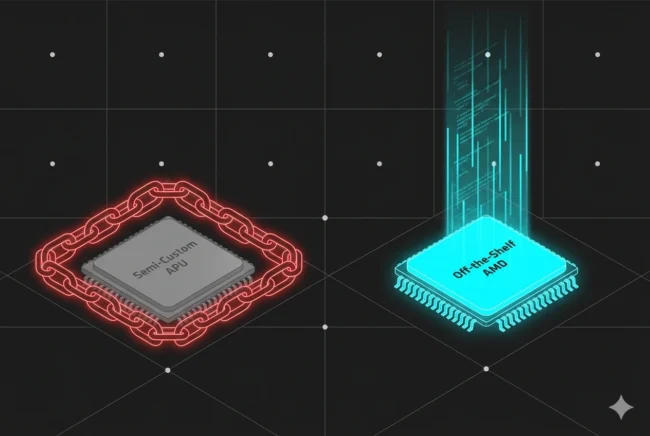
The Off-the-Shelf Pivot: According to prominent industry leaker Kepler_L2 on the NeoGAF forums, Valve is heavily considering abandoning the semi-custom APU route for the Steam Deck 2. Instead, they are looking at utilizing top-tier, off-the-shelf AMD silicon.
Avoiding the Obsolescence Trap: The danger of a semi-custom chip is the lead time. If Valve designs a bespoke APU, orders millions of wafers, and then faces a manufacturing delay in another component (like memory or displays), the silicon ages while sitting in a warehouse. By the time the device launches, the bespoke chip might already be outclassed by newer generic architectures.
Capitalizing on the Market They Created: In 2021, Valve had to design a custom chip because low-power gaming APUs didn’t exist. Today, because of the Steam Deck’s success, AMD and Intel are dedicating massive R&D budgets to the exact 15W-30W envelope Valve needs. Valve can simply pick the best available architecture off the rack and focus entirely on optimizing SteamOS around it.
The 2028 Release Window: Waiting for a True Generational Leap
If you were hoping to buy a Steam Deck 2 in time for the 2026 holiday season, prepare for disappointment. Valve engineers have explicitly stated that the technology simply isn’t ready.
Rejecting the “Iterative Update”
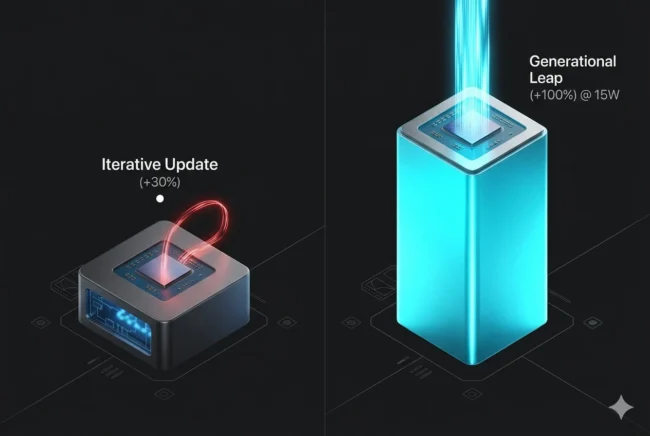
The “Demarcated” Uplift: Valve software engineer Pierre-Loup Griffais recently stated that Valve is not interested in a mere 20%, 30%, or even 50% performance bump if it comes at the cost of battery life. They are waiting for a foundational architectural leap that provides a massive, undeniable performance multiplier at the exact same 15W power draw.
The 2028 Target: Supply chain insiders now point to 2028 as the realistic launch window for the Steam Deck 2. This timeline allows Valve to completely bypass the current transitional architectures and wait for mature, next-generation manufacturing nodes.
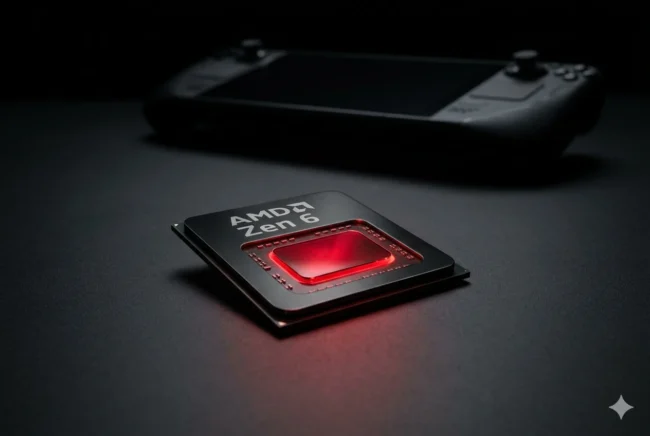
The Architectural Goal: Working backward from the 2028 timeline, the off-the-shelf silicon Valve is targeting will likely be based on AMD’s Zen 6 CPU architecture paired with the radically redesigned RDNA 5 (or later) GPU IP.
The Battery Mandate: The original Steam Deck struggled heavily in demanding games, often dying in under 90 minutes. Valve’s refusal to launch a successor now proves their absolute dedication to efficiency. The Steam Deck 2 will only launch when the silicon allows for a locked 60FPS in heavy AAA titles while delivering three to four hours of battery endurance.
The Supply Chain Crisis: How RAM and NAND are Dictating the Timeline
The delay of the Steam Deck 2 is not entirely due to a lack of processing power. A massive, ongoing component shortage is actively holding the entire industry hostage.
The Hidden Costs of Memory
The DRAM and NAND Shortage: As of mid-2026, the global supply of high-speed LPDDR RAM and NAND flash storage is severely constrained, driving prices to record highs. We have already seen this impact Valve directly, with the company confirming that recent stock shortages of the Steam Deck OLED were directly tied to memory procurement issues.
The High-Bandwidth Requirement: Integrated graphics live and die by memory bandwidth. To feed a next-generation RDNA 5 GPU, the Steam Deck 2 will absolutely require massive pools of ultra-fast LPDDR5X (or potentially LPDDR6) memory.
Protecting the Price Point: The magic of the Steam Deck was its accessible $399 starting price. If Valve tried to build the Steam Deck 2 today using 16GB or 32GB of cutting-edge memory, the Bill of Materials (BOM) would force the retail price to $700 or $800. Delaying the launch until the global memory market stabilizes ensures Valve can hit the aggressive price targets that define their hardware philosophy.
The “Magnus” Leak: A Glimpse at the Next-Gen Silicon
While Valve waits for the market to catch up to its ambitions, hardware roadmaps give us a compelling look at exactly what the 2028 handheld will be packing under the hood.
Decoding the Architecture
The Magnus APU: Leaked AMD hardware slides point to an upcoming APU class codenamed “Magnus.” Designed specifically for the next generation of premium handhelds, this architecture aligns perfectly with Valve’s timeline.
Cycles Per Watt Dominance: The transition to the Zen 6 architecture is expected to bring a massive improvement in cycles per watt. This means the CPU will require significantly less voltage to handle heavy game engine logic, freeing up the thermal budget for the GPU to render higher-fidelity graphics.
Display Enhancements: With the sheer power of an RDNA 5 GPU, the Steam Deck 2 will finally have the arithmetic muscle to move beyond the 800p resolution of the original. Rumors suggest Valve is evaluating 1440p OLED panels, allowing the device to utilize advanced upscaling technologies to deliver a pristine, high-density image that rivals premium tablets.
What This Means for the Handheld Ecosystem Today
The realization that the Steam Deck 2 is years away has profound implications for both consumers and developers operating in the current handheld space.
The Current Generation Lives On
The Dominance of the OLED: Valve’s strategy essentially cements the Steam Deck OLED as their flagship device for the foreseeable future. With its vastly improved screen, more efficient 6nm APU, and larger battery, it remains the most balanced device on the market today.
Software Over Hardware: Because the hardware target is locked for the next two years, Valve is pouring massive resources into software. The continuous maturation of SteamOS, Proton compatibility layers, and Linux graphics drivers (Mesa/Vulkan) ensures that games run better on the Deck today than they did at launch.
Developer Confidence: The extended lifecycle of the current Steam Deck is actually a massive win for game developers. It provides a stable, fixed hardware target. Developers know that if they optimize their game to run at 30FPS or 40FPS on the current Steam Deck, millions of users will be able to play it perfectly for years to come without the hardware foundation shifting beneath them.
Final Verdict: Patience over Compromise
In a tech industry obsessed with annual product cycles and minor iterative updates, Valve’s approach to the Steam Deck 2 is incredibly refreshing. They are refusing to release a compromised device just to appease the marketing calendar.
By actively waiting for the memory supply chain to recover and for silicon architectures like Zen 6 and RDNA 5 to mature into off-the-shelf components, Valve is guaranteeing that the Steam Deck 2 will be a monumental leap forward. If you are sitting on the fence waiting for a Steam Deck 2 in 2026, the leaks are clear: buy an OLED model now, or look to the Windows-based competition. The true next generation of SteamOS hardware is playing the long game.