
NVIDIA RTX 60 Series Delayed to 2028: Why You Shouldn’t Wait to Upgrade
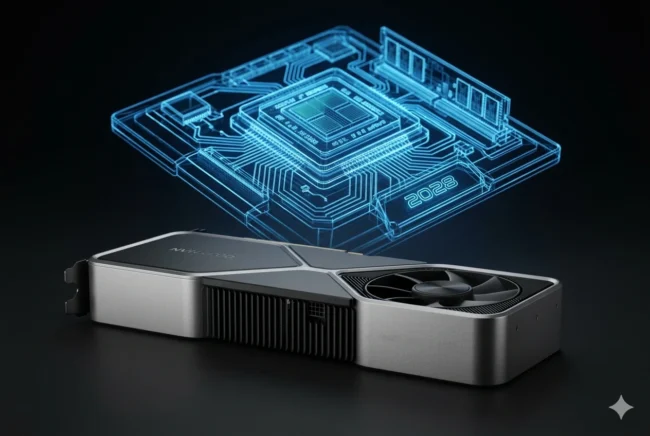
For over a decade, PC hardware enthusiasts have set their internal clocks to NVIDIA’s reliable two-year generational cadence. But as the computing landscape aggressively pivots toward enterprise AI, that predictable rhythm has been broken.
Recent supply chain leaks and industry reports confirm a stark reality for the gaming community: NVIDIA’s next-generation “Rubin” architecture—the highly anticipated RTX 60 Series—has been pushed back to 2028. Furthermore, the rumored “Super” mid-cycle refresh for the current RTX 50 Series appears to be completely shelved.
If you are currently holding onto an RTX 30 or early 40 Series card, waiting for the next major architectural leap is no longer a strategic delay; it is a multi-year stagnation. Here is why upgrading to the Blackwell architecture today is the most logical decision for power users.
The AI Tax: Why the 60 Series is Delayed
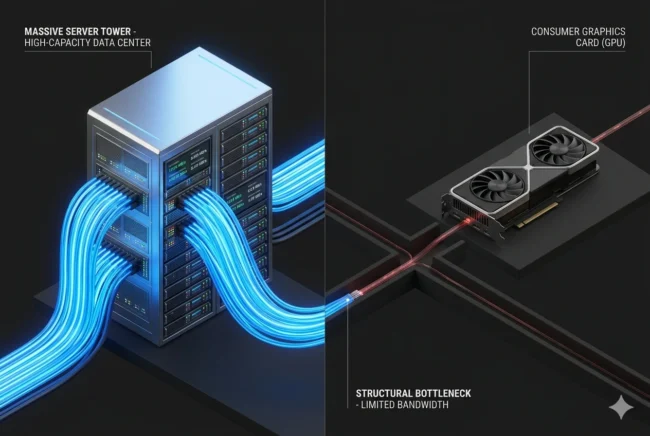
The delay of the RTX 60 Series is not an engineering failure; it is a calculated business decision driven by resource allocation. NVIDIA is currently navigating a massive global memory bottleneck, specifically regarding the high-speed DRAM required for both consumer GPUs and enterprise AI accelerators.
We are officially entering an era where consumer graphics are a secondary priority. The RTX 60 Series, originally slated for late 2026 or early 2027 production, has been sacrificed to feed the AI boom.
The Blackwell Reality: Maximum Localized Compute
With the RTX 60 Series out of the picture until 2028, the current RTX 50 Series (Blackwell) transitions from being “just another generation” to the definitive hardware platform for the next three years.
The leap from Ada Lovelace (RTX 40 Series) to Blackwell was substantial, specifically in terms of memory bandwidth and AI processing. The flagship RTX 5090 features a massive 512-bit bus delivering nearly 1.8 TB/s of memory bandwidth, while the 5080 and 5070 utilize the new GDDR7 standard to ensure ultra-low latency rendering.
Why Blackwell is Built for the “Long Haul”
What the 2028 RTX 60 Series Promises
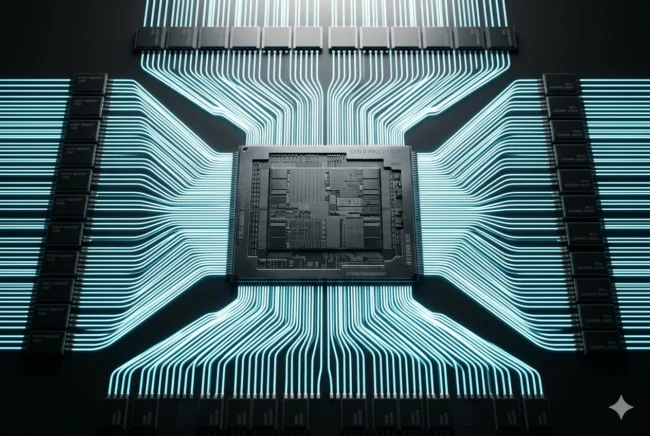
While waiting is not recommended, the leaked specifications for the 2028 Rubin architecture do outline a formidable upgrade, primarily focused on ray tracing rather than raw rasterization.
Current supply chain whispers suggest the RTX 6090 (GR202 silicon) will pack 192 Streaming Multiprocessors (up from the 5090’s 170) and potentially 32GB of memory on a 512-bit bus. The defining characteristic of the 60 Series is expected to be a 2x increase in Ray Tracing and Path Tracing performance, enabled by 6th-gen Tensor Cores and 5th-gen RT Cores.
NVIDIA’s goal with the 60 Series is to make path tracing computationally “free,” removing the performance penalty entirely.
The Verdict: The Opportunity Cost of Waiting
In hardware, there is always something faster on the horizon. But an upgrade cycle stretching to 2028 changes the fundamental math of PC building.
If you choose to wait, you are committing to at least three more years of compromised visual fidelity, struggling through unoptimized PC ports, and missing out on the current plateau of local AI acceleration. The RTX 50 Series is not a stopgap; due to industry economics, it is the long-term flagship standard.
Secure a Blackwell GPU, optimize your thermal headroom, and enjoy the definitive computing experience of the next three years. The RTX 60 Series can wait.