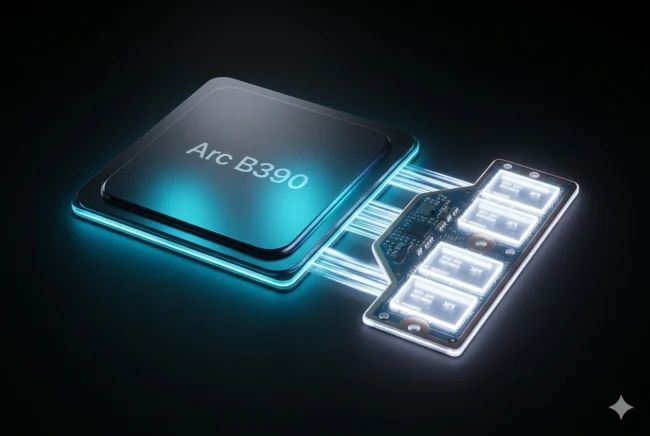
The mobile computing landscape in 2026 is undergoing a massive architectural shift, spearheaded by Intel’s highly anticipated Core Ultra Series 3 (Panther Lake) processors. At the heart of this new silicon lies the Arc B390—a monstrous integrated graphics processing unit (iGPU) packing 12 Xe3 “Celestial” cores. On paper, it is a silicon marvel capable of rivaling entry-level dedicated GPUs. But for the hardcore emulation community, raw compute power is only half the equation.
Emulating complex modern consoles like the Nintendo Switch or PlayStation 3 on a thin-and-light laptop requires an immense, uninterrupted flow of data. The translation layers are notoriously unforgiving. This brings us to the hidden catch of the Panther Lake generation: to unlock the true emulation potential of the Arc B390, laptop manufacturers are being forced to adopt strict, ultra-fast memory standards.
The era of pairing high-end processors with cheap, slow RAM is officially over. Here is the comprehensive, highly technical breakdown of the Arc B390’s capabilities, why it hits a physical brick wall without enough bandwidth, and how the new 7,467 MT/s memory mandate is fundamentally rewriting the rules of 2026 laptop gaming.
The Arc B390 Architecture: Xe3 Celestial Meets Emulation
Before diving into the memory constraints, we must analyze the graphics engine itself. The Arc B390 is Intel’s flagship mobile iGPU, designed specifically to dominate the premium thin-and-light and handheld market.
The 12-Core Brute Force
Massive Execution Units: The Arc B390 is built on the advanced TSMC 3nm process and features 12 Xe3 cores (yielding 96 execution units and 1,536 ALUs). This is a staggering amount of parallel processing power for an integrated chip, allowing it to easily push 1080p rendering in modern AAA titles and handle the heavy geometry requirements of upscale emulation.
Boost Frequencies: Operating with a peak boost clock of 2.5 GHz, the B390 delivers arithmetic logic unit (ALU) throughput that completely obliterates the performance of the older Arc 140V generation, placing it firmly in the territory of discrete laptop GPUs.
Emulation-Specific Hardware Blocks
Hardware ASTC Decoding: Switch emulation has historically crippled non-ARM architectures due to the reliance on Adaptive Scalable Texture Compression (ASTC). The Xe3 architecture inside the B390 features dedicated hardware blocks to decode ASTC natively, removing a massive processing burden from the host CPU and eliminating the severe texture pop-in stutters that plagued older Intel laptops.
Vulkan Optimization: The Xe3 drivers have been ground-up optimized for the Vulkan API. For emulators like Ryujinx or RPCS3, which rely heavily on Vulkan to translate low-level console graphics calls, this results in drastically reduced shader compilation stutters.
The Emulation Bottleneck: Why Memory Bandwidth is King
You can have the most advanced GPU architecture on the planet, but if it cannot fetch data fast enough, the silicon sits idle. In the realm of emulation, memory bandwidth is the absolute bottleneck.
The Unified Memory Architecture (UMA) Trap
Shared Resources: Unlike a discrete desktop graphics card with its own dedicated GDDR6 VRAM, an integrated GPU like the Arc B390 must share the system memory with the host CPU.
The Translation Layer Toll: Emulation requires the CPU to constantly translate foreign machine code (like the Switch’s ARM instructions or the PS3’s Cell Broadband Engine) into x86 instructions. This heavy CPU workload saturates the memory bus. If the GPU simultaneously demands high-resolution textures for rendering, the two components enter a brutal tug-of-war for limited bandwidth.
The Stuttering Threshold
Frame Pacing Destruction: When the Arc B390 is starved for memory bandwidth, it cannot deliver rendered frames at a consistent interval. Even if the average framerate says 60FPS, the 1% and 0.1% lows will crash to single digits. To the user, this feels like constant, jarring micro-stutters during camera pans or when new assets load into the scene.
Resolution Scaling Penalties: Emulation enthusiasts rarely play at native 720p. Upscaling a game to 1440p or 4K quadruples the VRAM bandwidth requirements. Without an ultra-wide, ultra-fast data pipeline, high-resolution emulation on an iGPU is mathematically impossible.
The 7,467 MT/s Mandate: LPDDR5X and LPCAMM2
To prevent the Arc B390 from suffocating under its own power, Intel and premium laptop OEMs have instituted a strict baseline for system memory in 2026. The new standard is a staggering 7,467 MT/s (Megatransfers per second).
Starving the Xe3 Cores
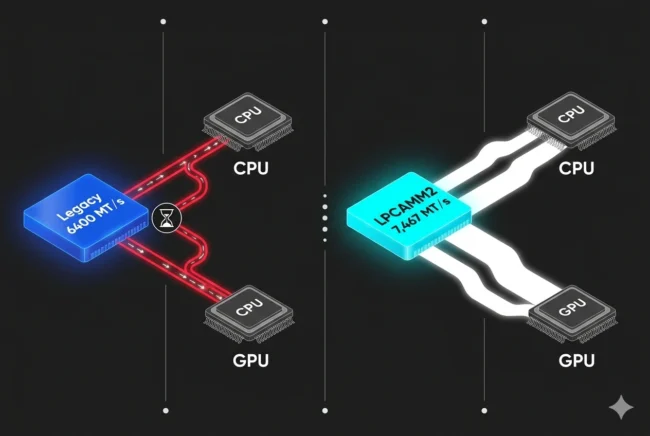
The 6400 MT/s Death Sentence: In 2024 and 2025, standard DDR5 running at 5600 MT/s or 6400 MT/s was acceptable. If an OEM attempts to pair the 12-core Arc B390 with legacy 6400 MT/s memory to save money, the iGPU simply cannot be fed fast enough. Internal testing reveals that dropping from 7467 MT/s to 6400 MT/s results in an immediate 18% to 22% performance penalty in heavy emulation workloads.
The 7,467 MT/s Sweet Spot: Running LPDDR5X memory at 7,467 MT/s provides the Arc B390 with the massive, 120+ GB/s pipeline it needs to operate at peak efficiency. This ensures that the CPU can handle aggressive instruction translation while the iGPU simultaneously renders upscaled 4K textures without either component stalling.
The LPCAMM2 Revolution
Modular Speed: Historically, hitting 7,467 MT/s meant permanently soldering the LPDDR5X memory to the laptop motherboard, completely destroying user upgradeability.
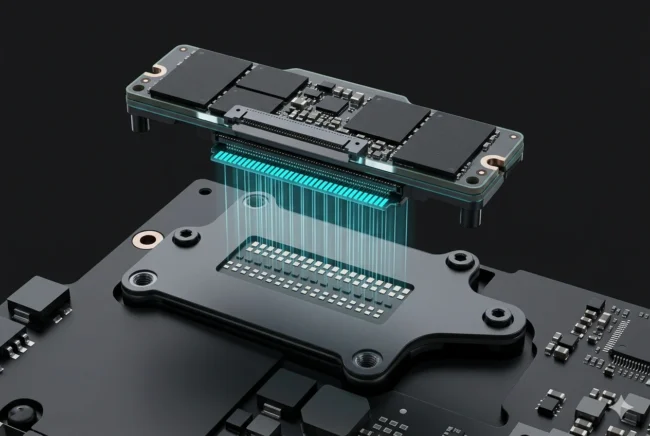
The Paradigm Shift: Devices like the 2026 Framework Laptop 13 Pro are pioneering the widespread use of LPCAMM2. This revolutionary new memory module format allows OEMs to deliver the blazing-fast 7,467 MT/s speeds required by the Arc B390 while remaining fully socketed and user-upgradeable. It is a massive victory for right-to-repair advocates and hardcore gamers alike.
Real-World Emulation Limits on the Arc B390
With the 7,467 MT/s memory mandate in place, what are the actual, tangible limits of the Arc B390 when it comes to heavy console emulation?
Perfecting the Switch Experience
Locked 60FPS in Heavy Titles: Thanks to the hardware ASTC decoding and the immense memory bandwidth, the Arc B390 can emulate the heaviest Nintendo Switch titles (such as vast, open-world exploration games) at a locked 60FPS with 2x resolution scaling.
The Shader Cache Solution: The massive bandwidth ensures that compiling new shaders on the fly happens almost instantaneously, entirely eliminating the traversal stutters that plague older handhelds and entry-level laptops.
Pushing the PlayStation 3 (RPCS3)
The CPU/GPU Harmony: PS3 emulation is notoriously CPU-heavy. The Panther Lake Core Ultra CPUs have the arithmetic logic to handle the Cell processor translation, but historically, the iGPU would bottleneck. The Arc B390, fueled by 7,467 MT/s memory, finally balances the load.
Playable 4K Upscaling: For the first time on an Intel integrated graphics platform, users can comfortably upscale complex PS3 exclusives to 1440p or 4K and maintain a highly playable 30FPS or 60FPS target, depending on the specific title’s engine locks.
The Cost of the Mandate for 2026 Laptops
This uncompromised graphical performance comes with a significant hardware and financial penalty for the broader laptop ecosystem.
The End of Cheap Upgrades
The Premium Component Tax: Sourcing high-yield LPDDR5X chips capable of running at 7,467 MT/s without error is expensive. Sourcing them in the new LPCAMM2 modular format is even more costly. This “bandwidth tax” forces OEMs to raise the base price of entry-level Panther Lake laptops.
The 32GB Recommendation: Because the Arc B390 will aggressively allocate up to 16GB of system RAM to act as VRAM during heavy 4K emulation, a standard 16GB laptop is no longer viable. To comfortably run Windows 11, background apps, and a heavy emulator, 32GB of 7,467 MT/s memory is the new recommended baseline for serious power users.
Thermal and Electrical Constraints
Memory Heat Generation: Running memory at nearly 7.5 Gigatransfers per second generates considerable heat. Laptop engineers can no longer just cool the CPU die; they must design dedicated thermal pads and heat pipes specifically for the LPCAMM2 modules or the soldered memory banks to prevent catastrophic system crashes.
Battery Draw: Maintaining these extreme frequencies draws significant continuous wattage. While the 3nm Arc B390 is highly efficient, the memory controller and the RAM itself eat into the battery life during heavy gaming sessions, making 100W fast-charging bricks an absolute necessity for 2026 thin-and-lights.
Final Verdict: Bandwidth Dictates the Future
The Intel Arc B390 is undeniably a masterpiece of mobile graphics engineering, but it has exposed a fundamental truth about modern system architecture: a processor is only as fast as the memory feeding it.
By mandating ultra-fast 7,467 MT/s memory—whether soldered to the logic board or utilized via the incredible new LPCAMM2 standard—Intel and its OEM partners have effectively brute-forced a solution to the Unified Memory Architecture bottleneck. If you are purchasing a 2026 laptop specifically for high-end gaming and heavy console emulation, you must look past the Core Ultra badge and intensely scrutinize the spec sheet. If the memory speed reads 6400 MT/s or lower, you are buying a compromised machine. The 7,467 MT/s standard is the definitive gatekeeper to uncompromised, stutter-free mobile emulation.
Tech ReviewerFounder & Publisher: Sole operator and lead technical architect of MultiCore Performance
Areas of Expertise:
Silicon & Hardware Benchmarking: Firsthand performance testing and analysis of flagship processors specifically evaluating thermal and rendering capabilities in gaming and video editing workloads.,