RTX 5070 Driver Crisis: Why Overclockers Are Reverting to Save Their Benchmark Scores
The NVIDIA GeForce RTX 5070 has defied global memory shortages to become the undisputed king of the Steam Hardware Survey in early 2026. Offering incredible rasterization muscle and DLSS 4 capabilities, it is the logical upper-midrange upgrade for the masses. But if you step away from the marketing sheets and venture into the forums of competitive overclockers and hardware enthusiasts, the narrative drastically shifts from celebration to pure frustration.
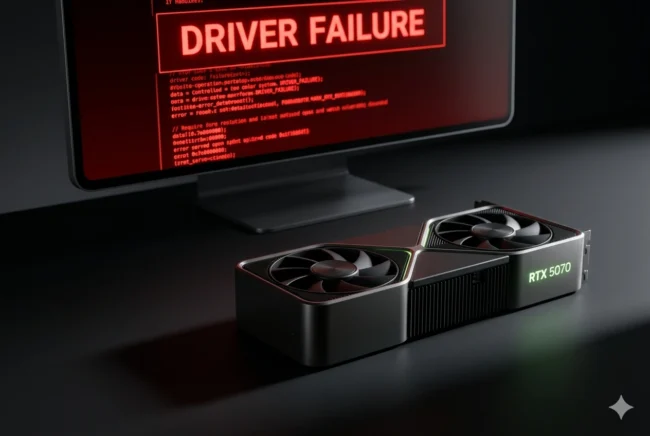
Over the last few months, RTX 50-series owners have been subjected to a catastrophic series of Game Ready Driver updates—culminating in the infamous version 595.71. Instead of optimizing the Blackwell architecture, these drivers have actively gutted power limits, triggered rampant system crashes, and destroyed synthetic benchmark scores.
Here is the comprehensive, highly technical breakdown of the RTX 5070 driver crisis, the specific bugs plaguing the architecture, and why the enthusiast community is aggressively reverting to older drivers to save their silicon’s performance.
The 595.xx Disaster: The 16% Performance Penalty
For a community obsessed with squeezing every last drop of performance out of their hardware, the recent driver updates have felt like a targeted attack on overclocking.
The “Unlaunched” Driver
NVIDIA’s recent release of Game Ready Driver 595.71 was supposed to be a standard stability update. Instead, it became a complete nightmare. Almost immediately after deployment, the community noticed massive performance regressions, leading NVIDIA into immediate damage control. The company quietly “unlaunched” the driver and scrambled for a hotfix.
However, the subsequent 595.76 update, which was pushed outside the standard NVIDIA app, largely failed to resolve the core power management flaws affecting the enthusiast tier.
Voltage and Power Limit Nerfs
The root cause of the performance drop lies in how the 595.xx driver branch handles GPU power profiles. Enthusiasts quickly discovered that despite the GPU usage reading 100% in monitoring software like MSI Afterburner or HWiNFO64, the actual power draw (in Watts) was being artificially capped by the software.
The driver caused the RTX 5070 to run at significantly lower voltages, physically preventing the core clock from boosting to its factory potential or maintaining a user-applied offset.
The Benchmark Bloodbath
For the competitive overclocking community, this power restriction was devastating. Users who spent hours dialing in a stable +450 MHz core overclock and chasing leaderboard positions in 3DMark Steel Nomad suddenly saw their scores plummet.
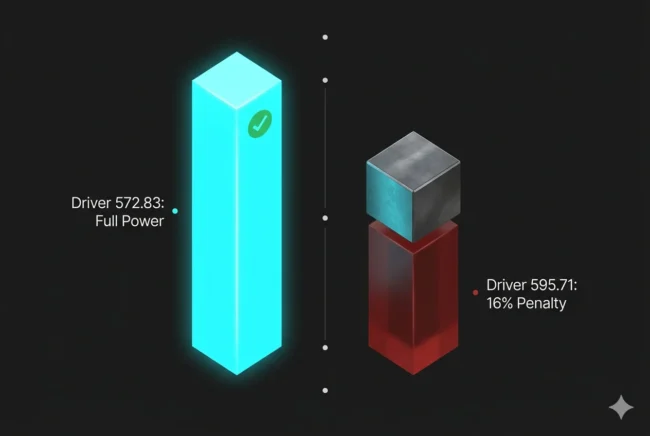
The artificial power limits introduced by the 595.xx drivers resulted in up to a 16% performance drop across the RTX 50-series. When you are fighting for the top 1% of Time Spy Extreme scores, a 16% penalty is an absolute death sentence to your run.
The Black Screen and 100% Fan Bug
Beyond the benchmarking regressions, the new drivers introduced severe system instability that bled out of synthetic tests and ruined standard gaming sessions.
TDR Timeouts (VIDEO_TDR_FAILURE)
Thousands of users reported random black screens accompanied by the GPU fans instantly spinning up to a terrifying 100%.
The Windows Event Viewer consistently flagged these crashes as VIDEO_TDR_FAILURE (or nvlddmkm Event ID 153). This error code indicates that the graphics driver had completely stalled, failed to communicate with the operating system, and could not recover, forcing a hard system reboot.
The DLSS and Reflex Triggers
Independent investigations by prominent tech outlets, including Gamers Nexus, labeled NVIDIA’s recent driver releases as “absolutely abhorrent.” Their testing revealed a brutal irony: the crashes were frequently triggered by NVIDIA’s own proprietary software features.
Enabling DLSS Frame Generation in titles like Marvel Rivals or utilizing NVIDIA Reflex caused immediate system lockups. Even simple actions like alt-tabbing with dual monitors running at different refresh rates proved enough to crash the fragile 595.xx drivers.
The Blackwell Overclocking Hard-Cap
The driver crisis is further exacerbated by the strict physical limitations NVIDIA baked directly into the Blackwell architecture, leaving overclockers with very little room to maneuver.
The +375 MHz VRAM Wall
Unlike previous generations where overclockers could push GDDR6X memory until they saw visual artifacting, the ultra-fast GDDR7 memory on the RTX 5070 is heavily locked down by the firmware.
NVIDIA has implemented a hard cap blocking memory overclocks higher than +375 MHz (+6000 MT/s). Requesting anything higher in third-party software simply defaults back to the +375 MHz limit, removing the thrill of the silicon lottery.
The On-Die Error Correction Illusion
For users trying to brute-force past the driver issues, pushing the memory to its limit is a trap. Blackwell utilizes aggressive on-die error correction.
When the memory is pushed too hard, instead of crashing the system, the error correction silently kicks in. This results in highly inconsistent frame times, micro-stutters, and increased memory junction temperatures for zero actual performance gain. Overclockers are finding that dialing the VRAM back actually yields higher, more stable benchmark results than riding the artificial ceiling.
The 12V-2×6 Power Cable Conundrum
While the NVIDIA drivers are undeniably flawed, the enthusiast community has discovered that the VIDEO_TDR_FAILURE crashes are actually a symptom of a much deeper, physical interaction with Windows 11.
Windows Power States vs. Linux
The latest Windows 11 updates aggressively manage GPU power alongside the NVIDIA driver. The system is constantly ramping voltages up and down and entering ultra-low power states.
Interestingly, Linux’s NVIDIA drivers handle power transitions much more conservatively. This is why Linux users have largely avoided the black screen fan-spin bug entirely on the exact same RTX 5070 hardware.
The Hardware Reseating Fix
Because Windows 11 and the 595.xx drivers are forcing such rapid, aggressive power transitions, any slight imperfection in the physical power delivery is instantly exposed.
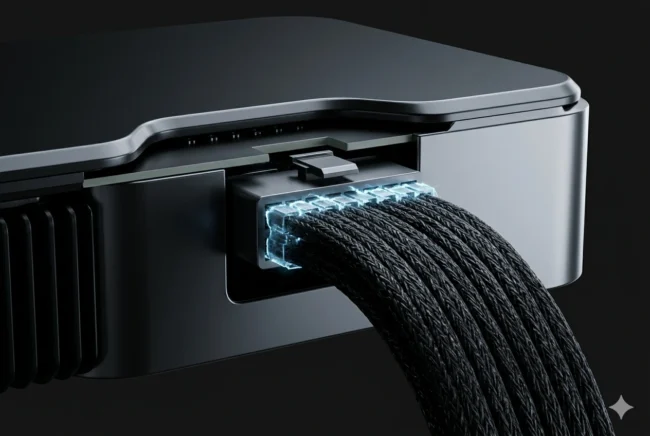
Many RTX 5070 owners have completely cured the 100% fan crash simply by opening their case and firmly reseating the 12V-2×6 power cable at both the GPU and PSU ends. The driver’s rapid power cycling was causing the GPU to momentarily lose contact on marginal pin connections, triggering the immediate blackout.
Why DDU and Reverting is the Only Viable Strategy
With NVIDIA seemingly unable to deploy a stable fix that doesn’t compromise power limits, the community has taken matters into its own hands.
The 572.83 Safe Haven
With the 595.xx branch actively nerfing voltages and triggering timeouts, the overclocking community has collectively decided to abandon current updates.
The standard protocol for any enthusiast right now is to boot into Windows Safe Mode, run Display Driver Uninstaller (DDU) to completely scrub the system of NVIDIA’s recent software, and revert to the highly stable version 572.83 (or earlier 572.xx branch drivers).
Bypassing the Software Bloat
Reverting not only restores the missing 16% performance and unlocked voltage profiles, but it also allows users to bypass the increasingly bloated NVIDIA App ecosystem.
Competitive overclockers are prioritizing raw, stable, well-coded graphics drivers over integrated software suites. By staying on the older 572.83 driver, they can confidently maintain their +450 MHz core overclocks, preserve their top-tier 3DMark leaderboard scores, and actually enjoy their games without the crippling fear of an impending black screen.
The Verdict: Quality Assurance in Decline
The RTX 5070 is a phenomenal piece of hardware trapped inside a deeply compromised software ecosystem. For years, NVIDIA has justified its premium pricing by touting the absolute stability and reliability of its driver stack. The 2026 driver crisis shatters that illusion.
When your most dedicated users—the ones buying premium hardware to push the limits of modern computing—are forced to actively avoid your latest software updates just to keep their computers from crashing, you have a fundamental quality assurance failure. Until NVIDIA can release a driver that manages power transitions without triggering the 12V-2×6 fail-safe or artificially capping core voltages, the “Update Driver” button will remain a dangerous trap for the enthusiast PC builder.
Tech ReviewerFounder & Publisher: Sole operator and lead technical architect of MultiCore Performance
Areas of Expertise:
Silicon & Hardware Benchmarking: Firsthand performance testing and analysis of flagship processors specifically evaluating thermal and rendering capabilities in gaming and video editing workloads.,
I used to bounce between too many sites hoping one would actually deliver but this one kept me hooked from day one. The loyalty program rewards consistent play and the interface is so clean I never feel lost. It really feels like a community built around player happiness. corosber

I used to bounce between too many sites hoping one would actually deliver but this one kept me hooked from day one. The loyalty program rewards consistent play and the interface is so clean I never feel lost. It really feels like a community built around player happiness. corosber